
Dawson Trail Dispatch, written by Norm Gregoire, December 2025
Page 16 https://issuu.com/dispatch222/docs/dawson_trail_dispatch_december_2025
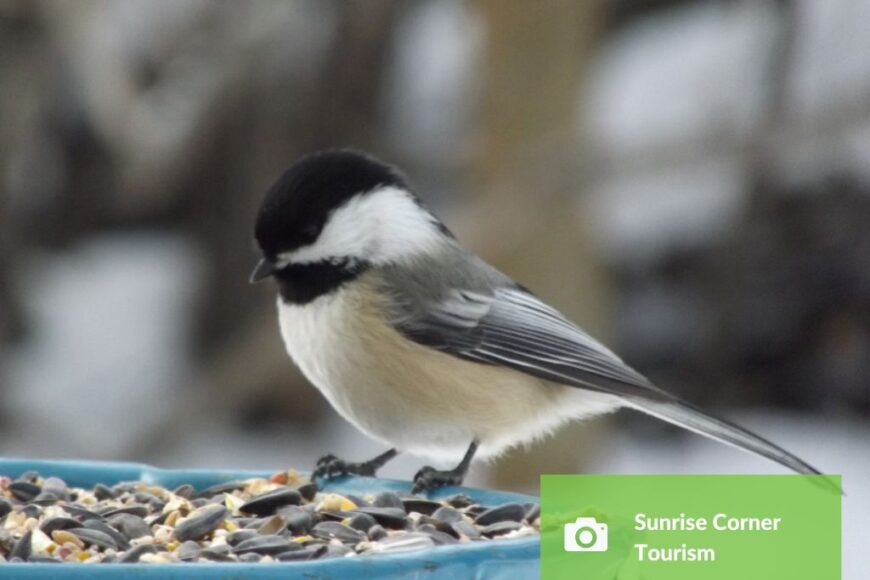
Here it comes, winter in the tall-grass prairie! This is the time of year when nature starts to slow down, species go dormant or leave the frigid temperatures for warmer areas, and the outdoors gets quiet… mostly. Head outdoors, spend five minutes in a treed area, and more times than not you’ll be awarded with one of my favourite sounds: chick-a-dee-dee-dee! It’s during the long Manitoban winters that we can reconnect with the overwintering birds of the tall-grass prairie.
The easiest way to ensure that you stay connected with wildlife over the winter is to put up some bird feeders around your yard. Any standard bird feeder with a high-fat food source such as black oil sunflower seeds, nyger seeds, or peanuts works great for attracting black-capped chickadees, blue jays, pine or evening grosbeaks, and a host of other birds. Suet feeders work for a variety of woodpeckers and nuthatches.
If you choose to feed birds during the winter, there are some general rules to follow. First off, use the above-listed high-fat foods and not things like bread. Bread is empty calories for birds and has the potential to do more harm than good. Secondly, it is important to clean your feeders regularly; this prevents the spread of disease and cleans up any potential mould growth when the weather jumps between freezing and thawing. A final and maybe most important recommendation for feeding birds in the winter is that if you are going to start feeding them, you must commit to feeding them right until spring! By providing a high-fat food source for these birds in a time when they need it most, they will begin to depend on it. If you take that food source away, especially during inclement weather, this could be devastating to the regular users of the feeder.
There are also birds that overwinter in the tall-grass prairie that don’t usually visit birdfeeders. One of my favourites, the common raven is often heard calling on the coldest days searching for carrion to fill up on. A relative of the raven, the American crow mostly migrates south but can sometimes be seen during the winter, especially in urban areas. Ravens are larger with a wedge-shaped tail, whereas crows have a fan-shaped tail. Ravens have a “beard” when they call their typical deeper croaking call compared to a crow’s high-pitched caw. On the ground crows walk, whereas ravens hop.
I tend to see more owls in the winter compared to the summer. The most common that I see near the Manitoba Tall Grass Prairie Preserve would be Manitoba’s provincial bird, the great grey owl. Also seen throughout the winter would be the northern hawk owl, the great horned owl, and maybe the most impressive winter bird, the snowy owl. The short-eared owl, a species at risk, mostly migrates but from time to time can be seen over the prairie during the winter.
If you are looking to stay connected with nature over the long Manitoban winter, I highly recommend getting into bird watching. The spring may be when the colours are flashier and there is a higher variety in species; however, these overwintering birds are hardy and adaptable, and just like us, they call this beautiful area home when it’s at its harshest.
Adventures with Nature Norm
If you are curious about winter bird watching, please join me on the next Adventures with Nature Norm on December 20th, 10am-12pm. A birdwatching walk will be followed by an indoor presentation at the Weston Family Tall Grass Prairie Interpretive Centre. For more information, please contact info@sharedlegacymb.ca. I hope to see you there!
Photo: Black-capped Chickadee by Sunrise Corner