
Glossary
Understanding prairie plant terminology is essential for accurate identification. This section defines key botanical terms such as flower structures, leaf shapes, and stem features used throughout the booklet. Use it as a reference while exploring the guide to clarify unfamiliar words and deepen your plant knowledge.
Flowers
Flower shapes
Regular – Radially symmetrical. Cut a flower at any angle (like a pie) and both halves are mirror images of each other (e.g., Black-eyed Susan).
Irregular – Bilaterally symmetrical. Only symmetrical on one plane because some petals/sepals have a different size or shape (e.g., violet).
Flower structure
Anther – The pollen container at the tip of a stamens (Fig. 1).
Bract – A small leaf or scale found at the base of a flower or flower cluster.
Ovary – The thickened (often globe-shaped) part of the pistil that contains the egg cells. Located above or below the petals, it matures into fruit after pollination.
Pistil – Female part of a flower, composed of stigma and style (Fig. 1). Typically found at the very center of a flower. Flowers may have one or more pistils.
Sepal – Modified leaves that form the outer whorl of a flower. (Fig. 1). They enclose and protect the maturing bud.
Stamen – The male reproductive organ of a flower that is made up of an anther at the end of a filament (Fig. 1). Stamens are found immediately exterior to the pistil(s). Flowers may have one or more stamens.
Stigma – The structure at the tip of a pistil that receives pollen (Fig. 1). A stigma may have two or more lobes.
Tepals – Sepals and petals that look alike.
Flower clusters
Disk – The central portion of a flower cluster in the Asteraceae family that is made up of many disk flowers.
Disk flowers – One of two flower types in the Asteraceae family. These small flowers have petals in a tube shape that surround pistils and stamens. Many species have a central cluster of disk flowers that are surrounded by ray flowers. This booklet will refer to the central cluster of disk flowers as a disk. Compare with ray flowers.
Erect – Upright and vertical.
Ray flowers – One of two flower types in the Asteraceae family. These flowers appear as strap-like petals around the central disk. Viewed closely, stamens and pistils can be seen at the base of each flower. This booklet will refer to the ray flowers as petals. Compare with disk flowers.
Stalk – A catch-all term for the supporting stem of an organ. May refer to a flower stalk, leaf stalk or main stem.
Terminal – Flower cluster positioned at the stem tip.
Umbel – A flower cluster with one attachment point for all flower stalks. Flowers are often at the same height, creating a flat top to the cluster (Fig. 2).
Umbellet – Small umbels that make up a larger compound umbel.
Leaves
Leaf divisions
Compound leaf – One of two leaf types. Compound leaves are separated into two or more smaller leaf-shaped structures (leaflets). Leaflets may also be divided, making the compound leaf divided ≥ 2 times. Compare with simple leaves.*
Pinnately compound – Leaflets arranged on either side of a common axis (the mid-vein); “of a feather” (Fig. 3).
Palmately compound – Leaflets radiate from a common point, like a hand with fingers spread (Fig. 3).
Leaflet – Leaf-like structures that make up a compound leaf.
Simple leaf – One of two leaf types. A leaf that is not divided into leaflets but may be deeply lobed. Compare with compound leaves.*
Terminal leaflet – Leaflet positioned at the leaf tip.
Note: All leaves have a bud at the base of their leaf stalk (in the axil), leaflets do not. You can
use this feature to differentiate between simple leaves from compound leaves and stems.
(Fig. 4). Also, a compound leaf will lay flat (in one plane), a branch will have leaves sticking
out in different directions (planes).
Leaf position on stem
Alternate leaves – One leaf per node. Leaves appear randomly placed on the stem.
Basal leaves – Leaves attached to the lowest part of the stem, originating from where the stem meets the ground.
Basal rosette – Several leaves attached in a circle at the base of a plant. Leaves radiate from a central point in the ground.
Erect – Upright and vertical.
Opposite leaves – Two leaves per node, found on opposite sides of the stem. Leaves arranged in pairs; each pair often rotated 90 degrees to the ones next to it.
Stalk – A catch-all term for the supporting stem of an organ. May refer to a flower stalk, leaf stalk or main stem.
Whorled – Three to eight leaves (or flowers) per node, attached in a circle around the stem.
Leaf shape
Elliptical – In the shape of a narrow oval (an ellipse); widest in the middle and equally narrower at the two ends (Fig. 5).
Lance – In the shape of a lance; longer than wide with the widest point below the middle of the leaf (Fig. 5).
Linear – Long and narrow (Fig. 5).
Oblong – Shape that is in between an elongated oval and rectangle (Fig. 5).
Spatulate – In the shape of a spatula; rounded tip with the widest point towards the leaf tip and gradually tapering to the leaf base (Fig. 5).
Leaf edges
Entire – Simple leaves with smooth edges (Fig. 6). Teeth and lobes are absent.
Lobed – Leaf with small, rounded divisions along the edge (Fig. 6).
Toothed – Leaf with jagged edges. (Fig. 6). Teeth may be pointed or rounded.
Leaf structure
Vein – Small capillaries that transport water and nutrients to and from a leaf. Some veins may be more noticeable than others (e.g., middle (“mid”) vein).
Stems
Stems
Ascending – Growing upward or turned up.
Axil – The upper angle where a leaf or branch meets the stem.
Erect – Upright and vertical.
Node – Place on the stem where the buds, leaves and branching stems originate.
Rhizome – An underground, root-like stem.
Stalk – A catch-all term for the supporting stem of an organ. May refer to a flower stalk, leaf stalk or main stem.
Figures
Figure 1
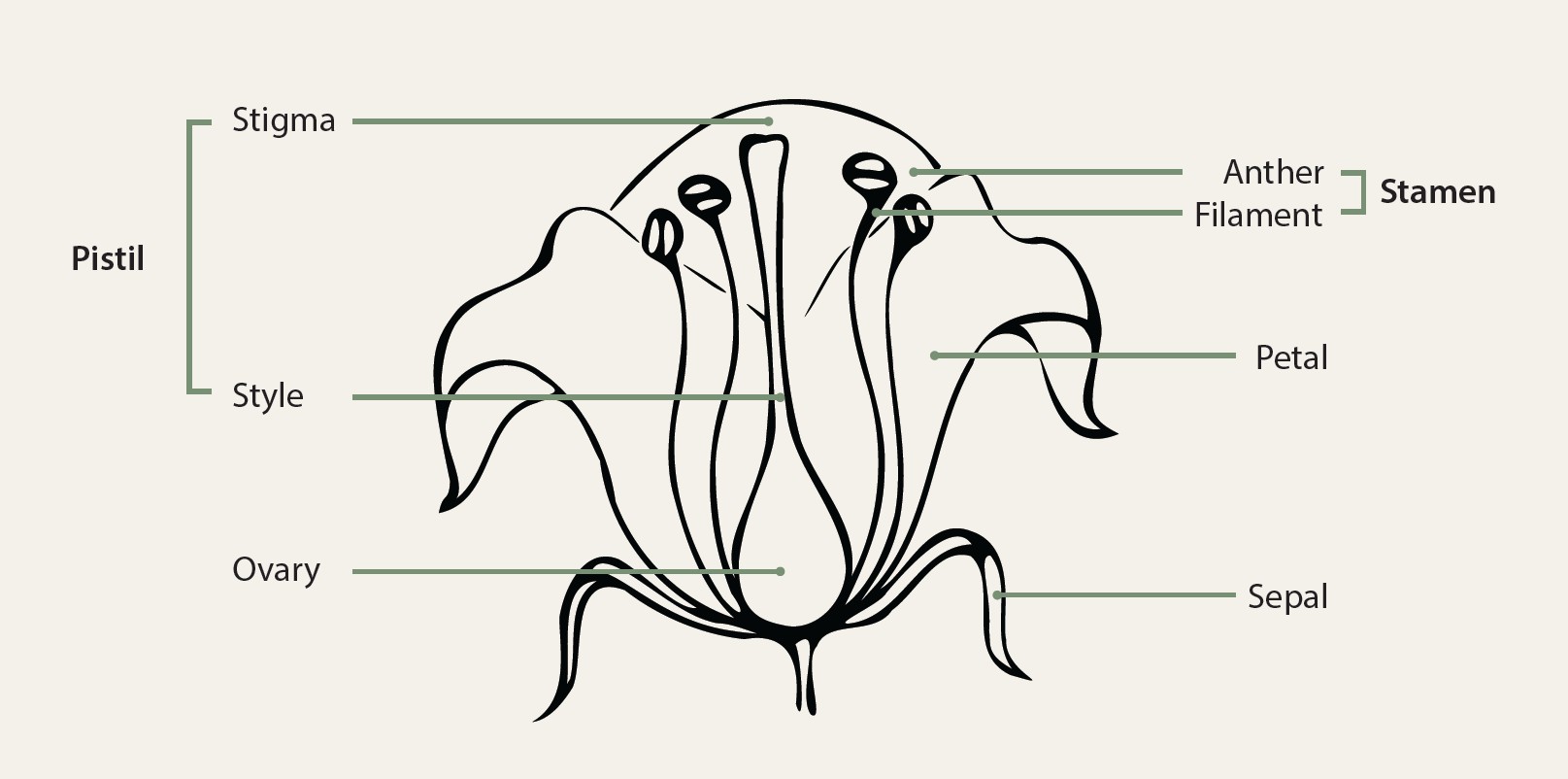
Figure 1. Labelled diagram of a flower cut in half to show the different floral parts. Although each part may vary in number (e.g., one species may have 4 stamens/ flower whereas another species may have over 100 stamens/flower), they are always found in the same location. From exterior to interior, there are sepals, petals, stamens and then pistils as the most interior structure.
Figure 2

Figure 2. Simplified drawing of an umbel and compound umbel. Lines represent
flower stalks and circles represent flowers.
Figure 3
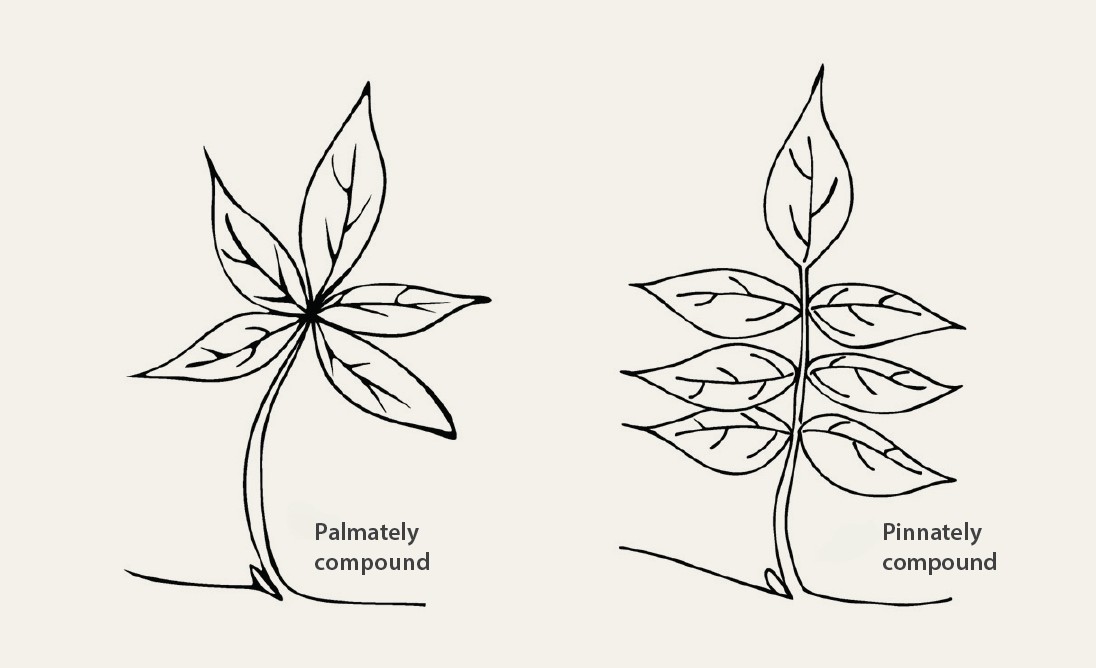
Figure 3. Simplified drawings of palmately and pinnately compound leaves.
Figure 4
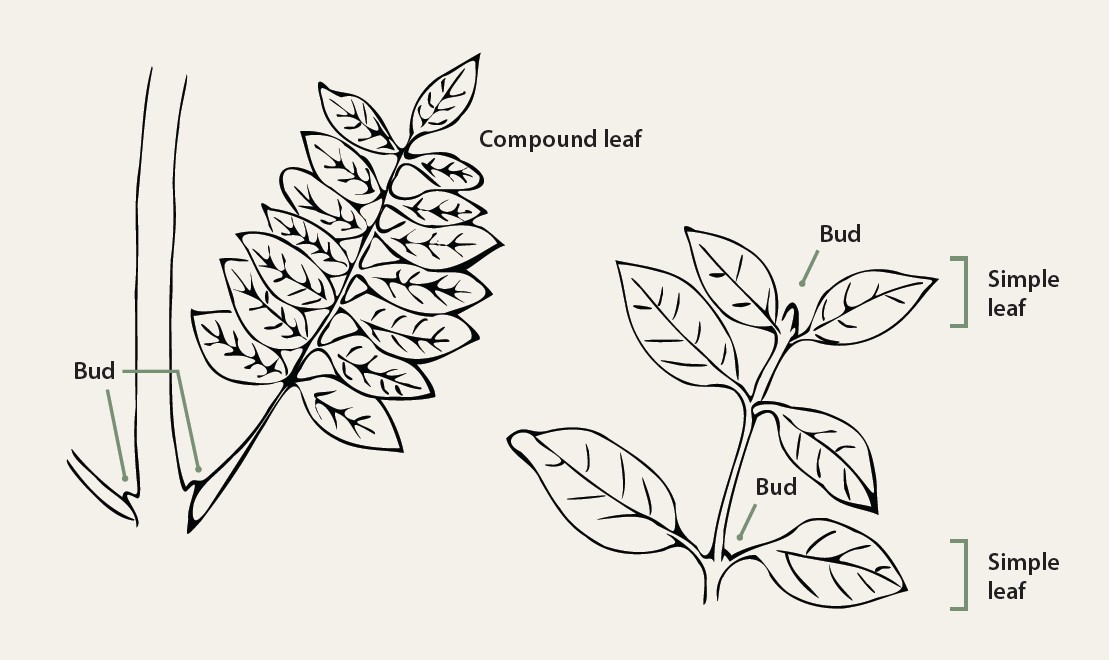
Figure 4. Simplified drawing of a compound leaf vs. a branch with simple leaves
(with an opposite leaf arrangement).
Figure 5
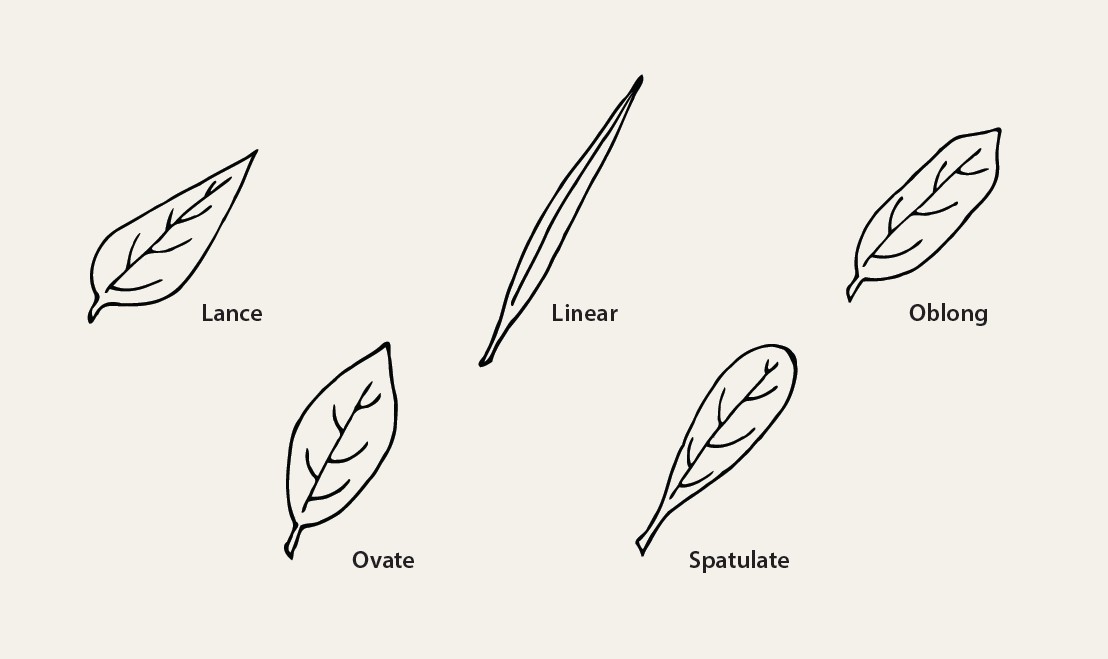
Figure 5. Simplified drawings of the different types of leaf shapes defined and used
in this booklet.
Figure 6
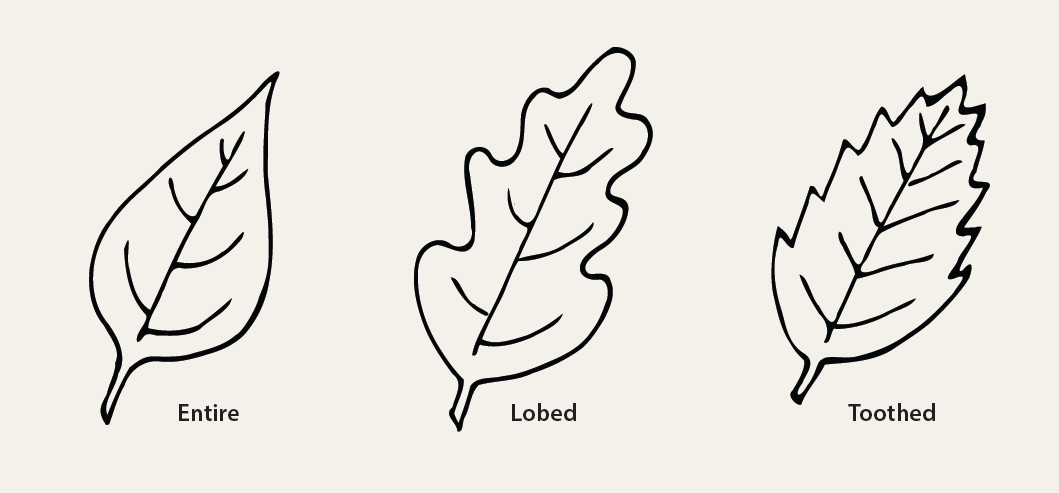
Figure 6. Simplified drawings of the different types of leaf edges defined and used
in this booklet.