
Dawson Trail Dispatch, written by Norm Gregoire, November 2025
Page 16 https://issuu.com/dispatch222/docs/dawson_trail_dispatch_november_2025
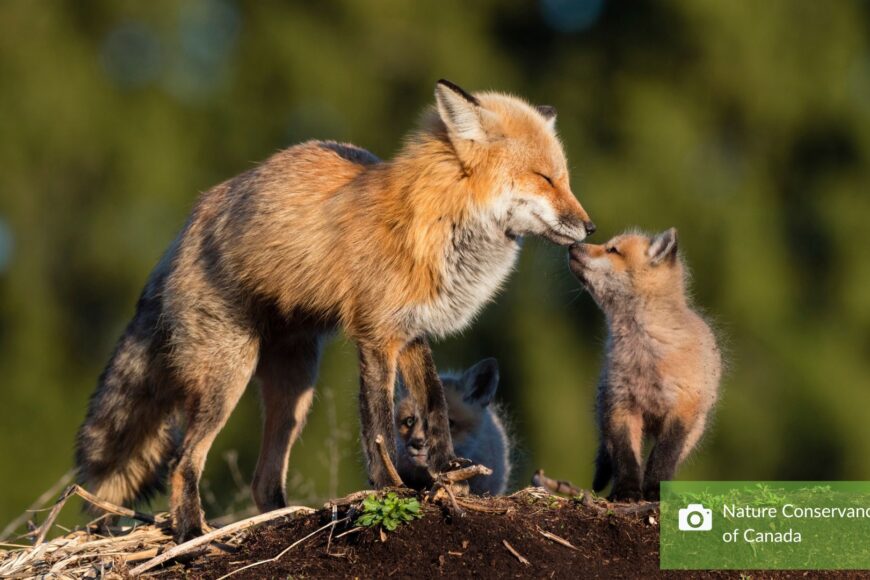
Earlier this fall, I was walking on the Prairie Orchid Trail in the Manitoba Tall Grass Prairie Preserve, completely lost in my thoughts of an upcoming field trip that was due to arrive later that day. Out of the corner of my eye I caught movement in the open prairie, maybe fifty meters away. At first, I couldn’t tell what the cause of the swaying big bluestem grass was, but after a few seconds a furry red streak exploded from the grass, high into the air and then back down again. This happened again, and shortly after, a red fox sauntered by with a meal in its mouth. Wow, what an amazing thing to witness! These unexpected glimpses into nature are something I love about the tall-grass prairie. We have such a variety of wildlife that lives here; there is always something new to discover and learn. After that day I couldn’t help but do some more research into the fantastic fox of Manitoba.
Foxes are one of three canine species that live in the tall-grass prairie area, the others being coyotes and wolves. Red foxes are much smaller, weighing in at ten to fifteen pounds on average. But like coyotes and wolves, red foxes are great opportunistic predators. They are focusing on smaller prey like rodents but will also eat everything from insects to berries to frogs.
A typical yearly cycle for a red fox begins with the mating season from February to March. Red foxes are considered monogamous, meaning they mate with a partner for the entirety of a season. After a gestation period of fifty days, a litter of four to nine kits is born. Both parents help raise the young throughout the summer, where the main activities are teaching the young essential life lessons like hunting. By fall and into winter the kits go their own way, looking to establish their own territory and start the cycle over again.
I’ve been lucky enough to have spent some time working in the far north of Manitoba, where red foxes and Manitoba’s other fox species, the Arctic fox, live alongside each other. The traditional range of the red fox does not extend to the far north, but in 2014 a photographer took the first known photo of a red fox. Since that time, they have become more numerous. The main theory is as the north warms; it becomes more hospitable for red foxes. This is not good news for the Arctic fox. The red fox is nearly double the size of the Arctic fox, and they generally are competing for the same resources. The red fox has even been known to predate on the Arctic fox. This is a real worry for the Arctic fox as they head into a warming future.
When we live in an area with such an array of wildlife, we can sometimes forget about the species we don’t see daily. Foxes are adaptable animals who are a welcome presence in the tall-grass prairie; I hope to enjoy many memorable sightings in the future.
Adventures with Nature Norm
If you are interested in learning more about the fox of Manitoba, join me on the next Adventures with Nature Norm, November 22, 10am-12pm at the Weston Family Tall Grass Prairie Interpretive Centre. We will enjoy a short walk on the preserve followed by an indoor presentation. All are welcome! For more information, contact info@sharedlegacymb.ca.
Photo credit: Nature Conservancy of Canada