Yellow flowers
Bright and abundant, yellow flowers are a hallmark of prairie summer. This section features goldenrods, sunflowers, and other species that dominate the landscape with their vivid hues. Use the photos and descriptions to distinguish between lookalike species and appreciate the subtle variations among them.
Black-Eyed Susan (Rudbeckia hirta)
Plant height 1 to 2 feet
Bloom season June to October
Habitat Sun; upland fields, prairies, open woods, roadsides, disturbed soils
Flowers
- >7 yellow-orange petals; dark brown-purplish disk that may be slightly cone-shaped
- 2 to 3 inch diameter
- Single terminal flower with petals usually pointing slightly downward
Leaves
- Alternate; simple; entire or with few shallow teeth
- Green; variable in shape and size; stalks of leaves shorten ascending the stem
- Normally 2 to 7 inches long, 2 inches wide
- Densely hairy, pillowy soft
Stems
- Green with burgundy speckles
- Unbranched
- Covered in long, stiff, white hairs
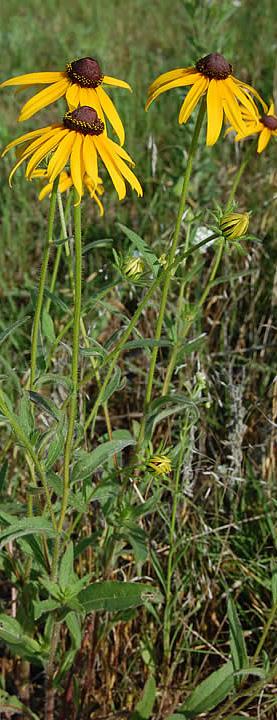
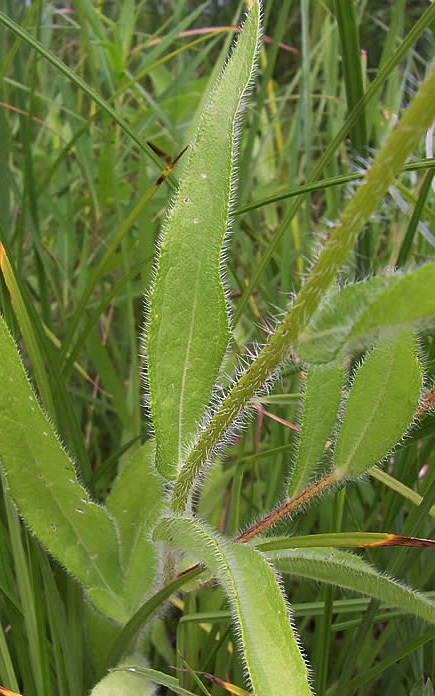
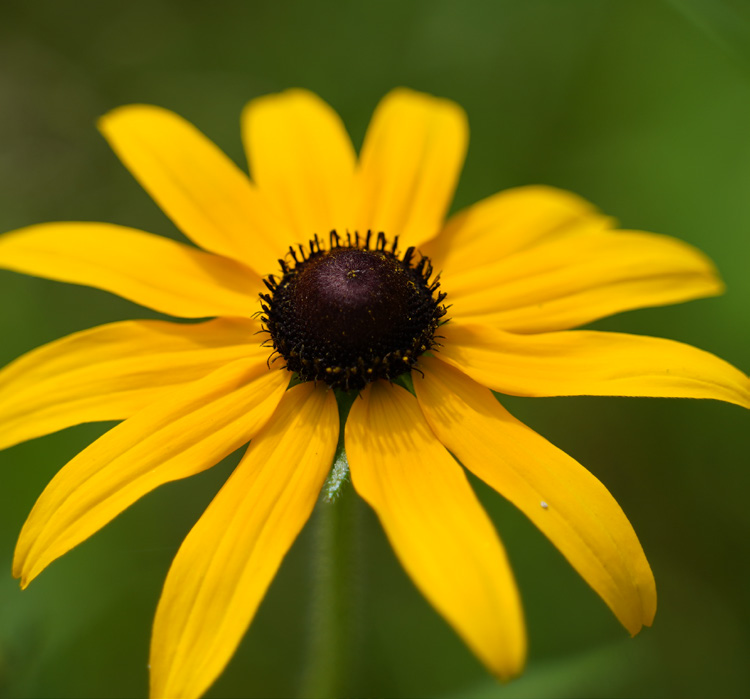
Nectar source for the Poweshiek skipperling, which is listed as endangered by the Committee on the Status of Endangered Wildlife in Canada, endangered under the Manitoba Endangered Species Act, and globally imperiled by NatureServe. Flowers act as a “platform” flower that is used by a wide variety of insects, including butterflies, stick worms, beetles, bees, flies, ambush bugs and crab spiders.
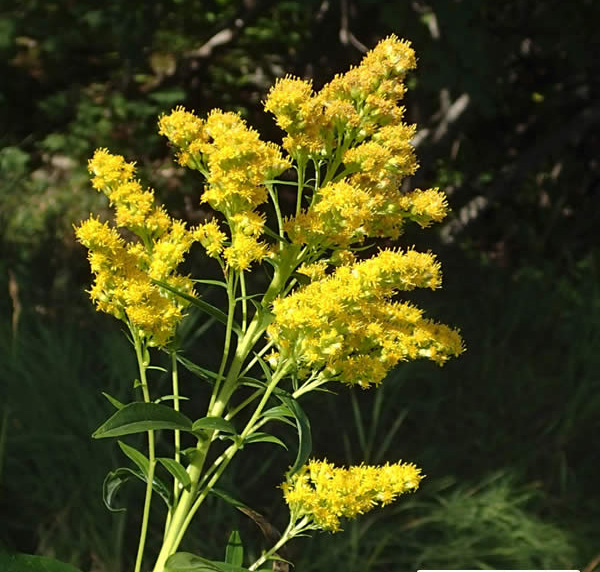
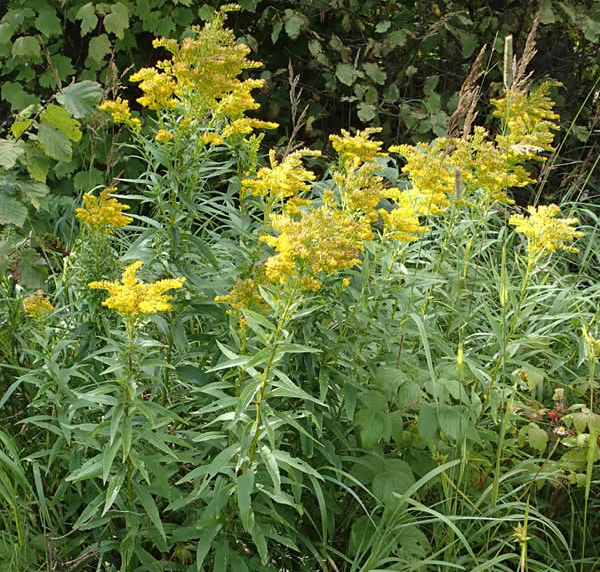
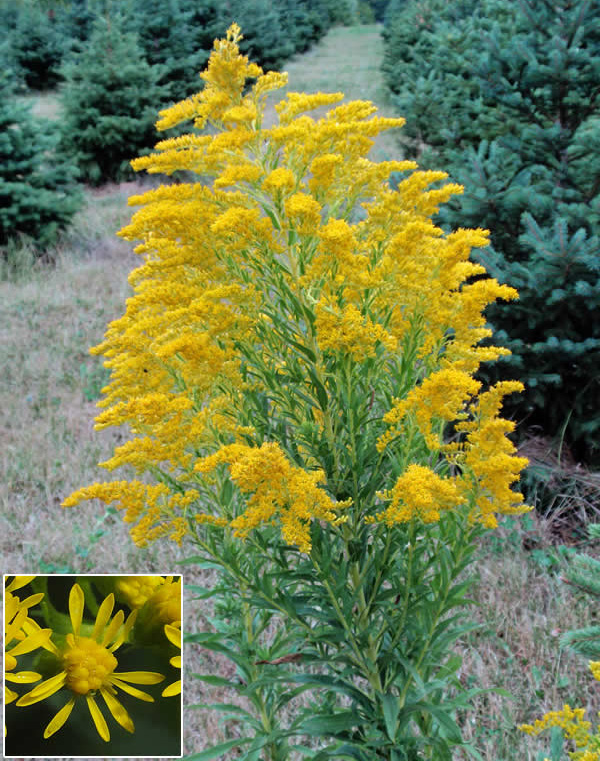
Canada Goldenrod (Solidago canadensis)
Plant height 1 to 3 feet
Bloom season July to October
Habitat Sun; moist fields, roadsides, open woods, wetland edges
Similar species Giant Goldenrod (p. 14), which is typically a taller plant with smooth leaves and a red stem
Flowers
- >7 yellow petals; small yellow disk
- ¹ ⁄₈ inch diameter
- Flower cluster shape is variable, pyramid-shaped to spreading and drooping clusters, sometimes more compact and club-shaped on smaller plants; 100 to 1300+ small, stalked flowers
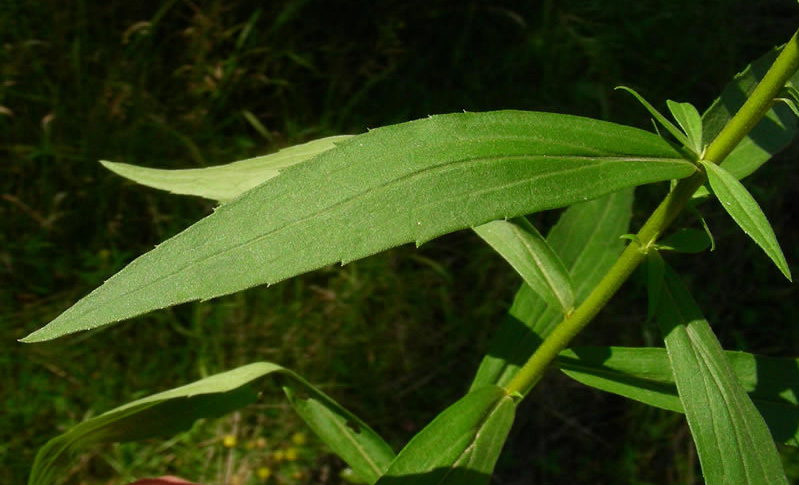
Leaves
- Alternate, without basal rosette; simple; sharp toothed, except near base
- Pinwheel arrangement from above
- Stalkless, 3-veined, broadest near middle, tapering to a sharp point at tip
- 1 to 4 inches long, ¼ to 1 inches wide
- Generally rough textured, occasionally smooth
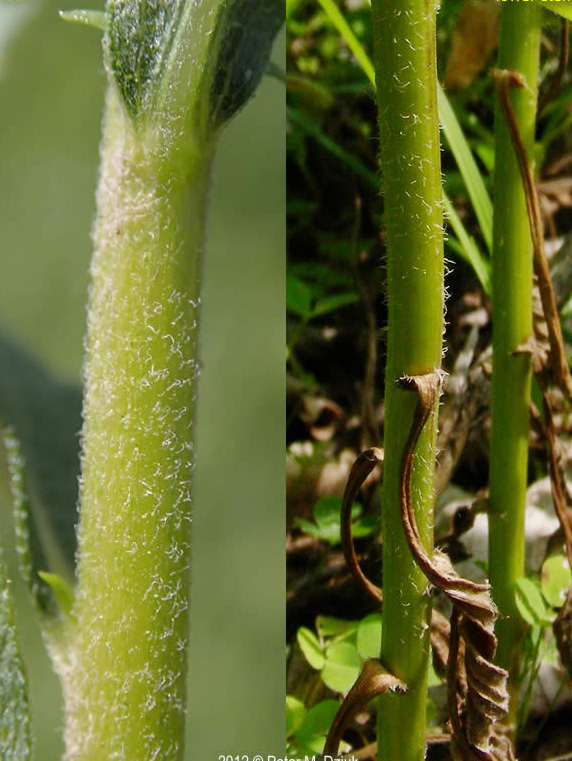
Stems
- Erect and rigid; stem is densely leafy
- Lightly hairy, at least above the middle
- Long, creeping rhizomes; often forming dense colonies
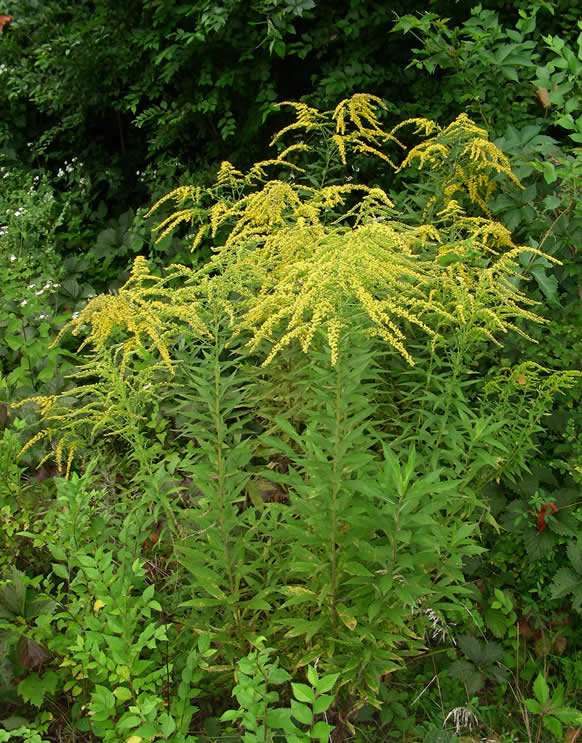
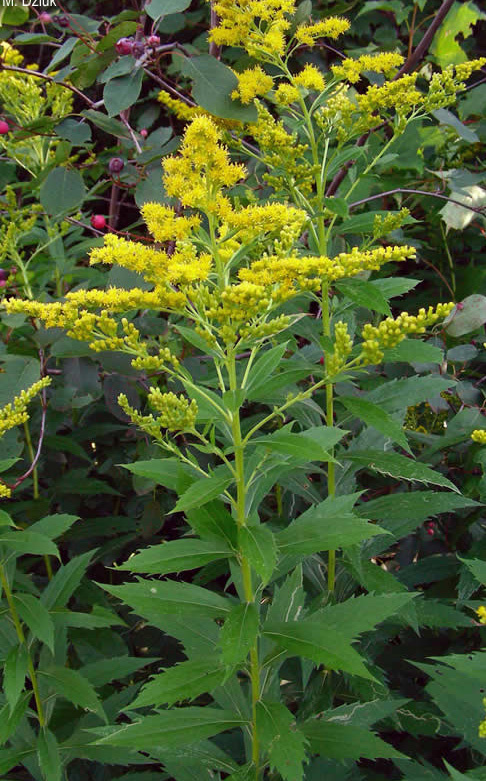
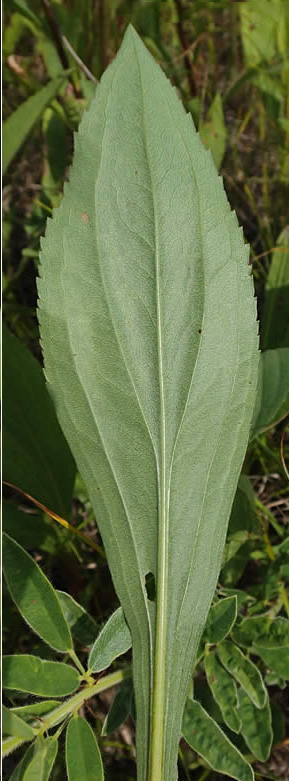
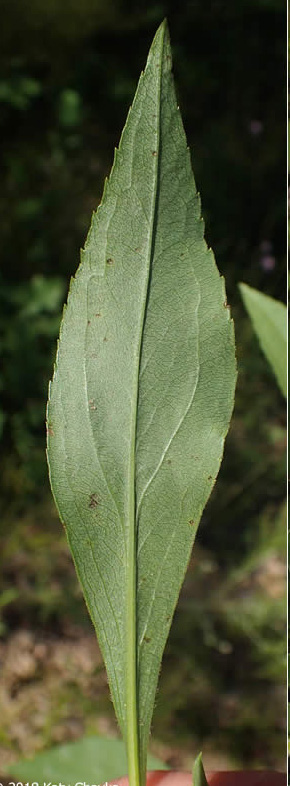
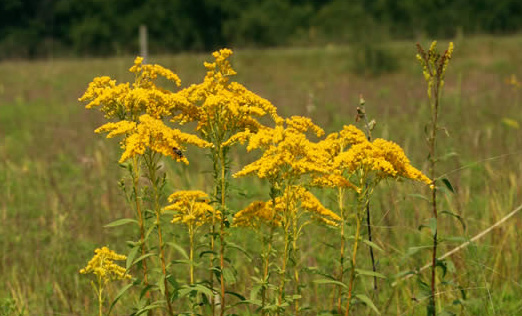
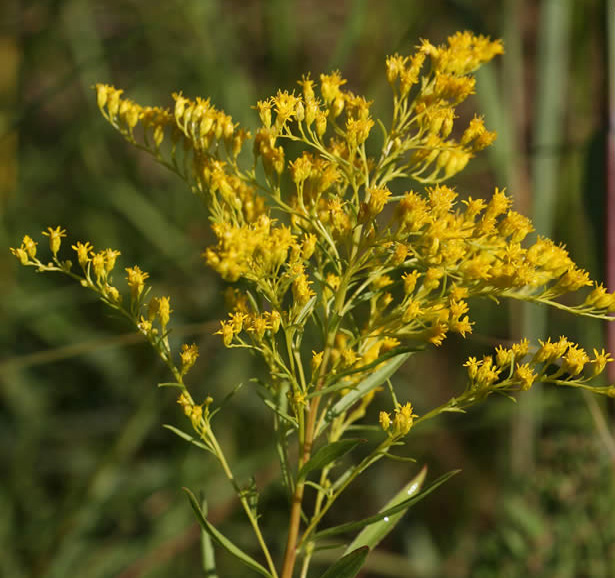
Giant Goldenrod (Solidago gigantea)
Plant height 2 to 5 feet
Bloom season August to October
Habitat Sun; average to moist soil; open meadows, fields, woodland edges, roadsides, marshes, swamps, along streams and rivers
Similar species Canada Goldenrod (p. 12), which is typically a shorter plant with rough leaves and a green stem.
Flowers
- >7 yellow petals; small yellow disk
- ¼ inch diameter
- 40 to 1200+ small, stalked flowers; cluster shape is variable but usually pyramidal with arching branches, sometimes more erect
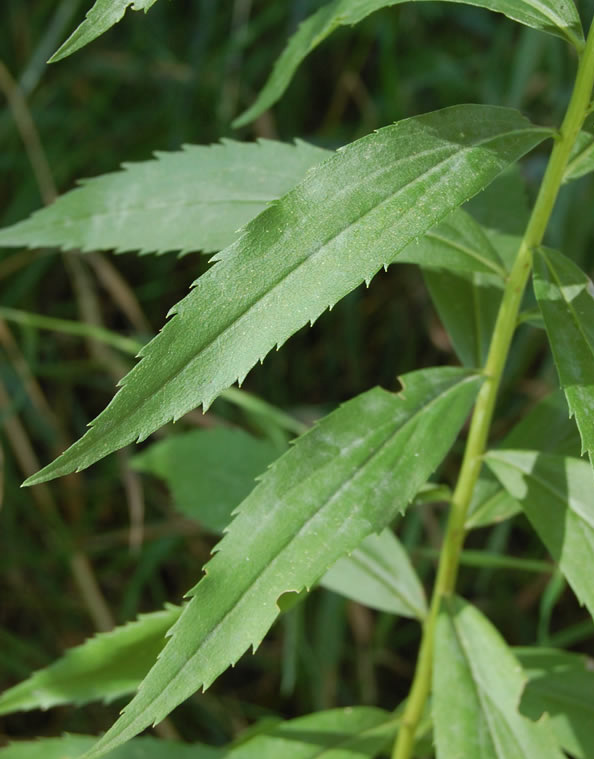
Leaves
- Alternate, without basal rosette; simple; serrated with sharp teeth and a smooth base, uppermost leaves may be entire
- Stalkless, 3-veined
- Broadest near the middle, tapering to a sharp point at the tip
- 2½ to 5 inches long, ½ to 1¾ inches wide
- Smooth, may be hairy along veins
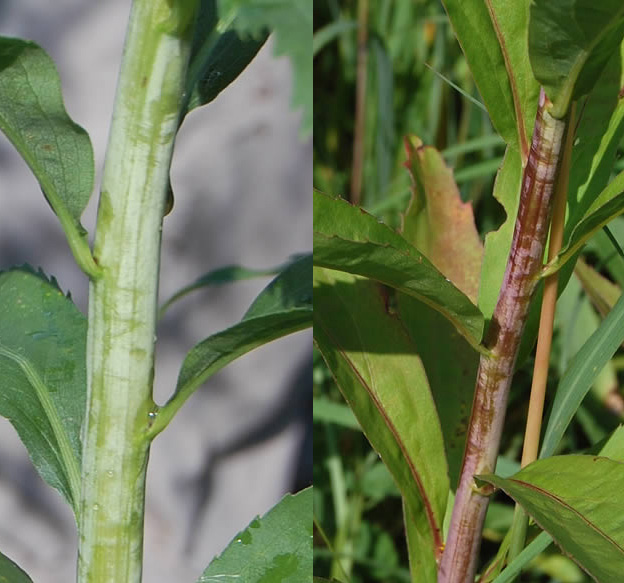
Stems
- Often reddish, may contain whitish wax that rubs off
- Colonial from long rhizomes
- Erect and rigid
- Hairless except in the flower clusters
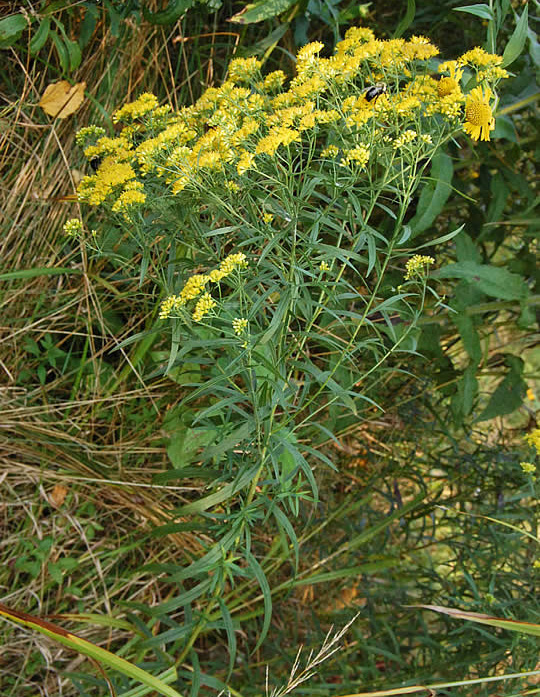
Grass-leaved Goldenrod (Euthamia graminifolia)
Plant height 1 to 2 feet
Bloom season August to October
Habitat Sun; moist, wet, sandy to gravelly soil; meadows, ditches, fens, shores
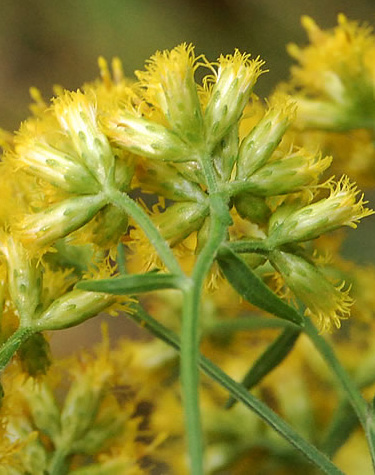
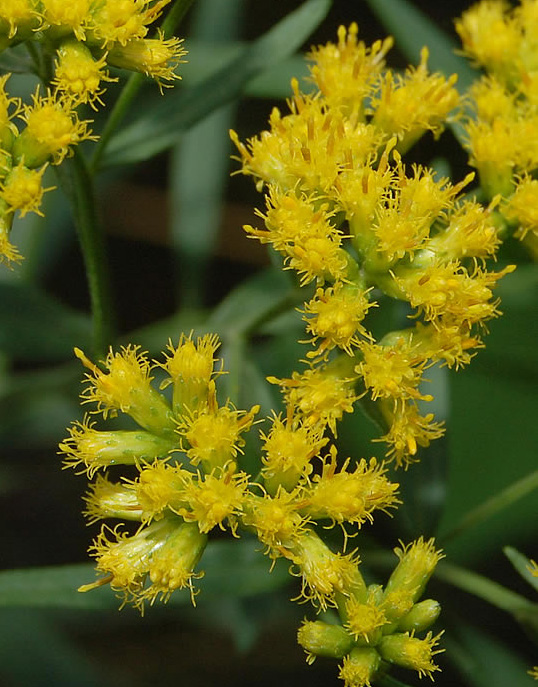
Flowers
- Yellow flowers; no obvious separation between petals and disk
- ≤ ¹⁄₈ inch diameter;
- Slightly round to flat topped clusters; 20 to 35 flowers/cluster; flowers typically stalkless
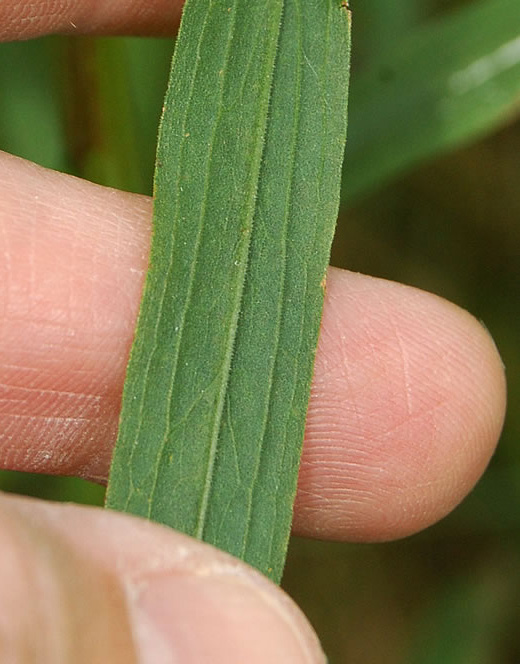
Leaves
- Alternate, without basal rosette; simple; entire
- 1 ½ to 4 inches long, ¹⁄₈ to ½ inch wide
- Lance-shaped to linear, 15 to 20 times as long as wide; stalkless; pointed at tip
- Surface of leaf is smooth; 3-veined, larger leaves 5 veined
Stems
- Unbranched in lower plant, few to many leafy branches in upper plant, creating a bushy top
- Smooth with thin rows of fine, white hairs
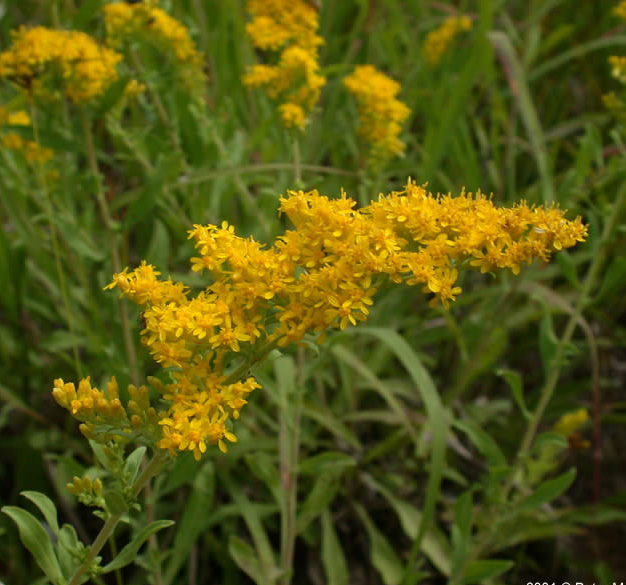
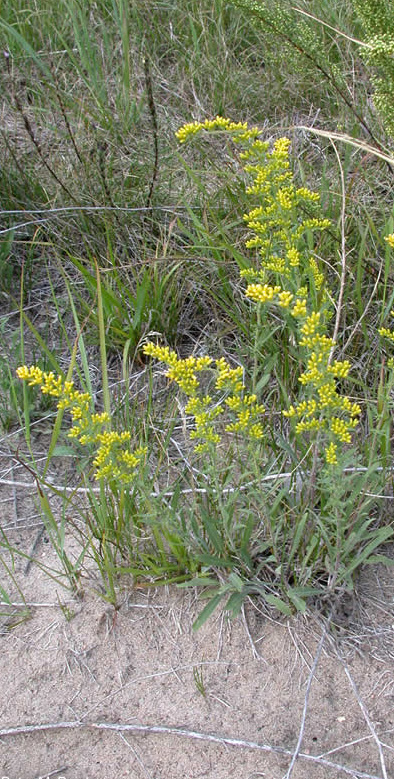
Gray Goldenrod (Solidago nemoralis)
Plant height 12 to 20 inches
Bloom season July to September
Habitat Part shade to sun; average to dry sandy to gravelly soil; prairies, roadsides, railroads, open woods, outcrops, dunes
Similar species Missouri Goldenrod (p. 26), which has reddish stems and smooth leaves and stem. Flower clusters are variable shapes.
Flowers
- > 7 yellow petals; small yellow disk
- ¼ inch diameter
- Dense, plume-shaped flower clusters up to 7 inches long, often arching near tip; flowers with short stalks covered in short, white hairs
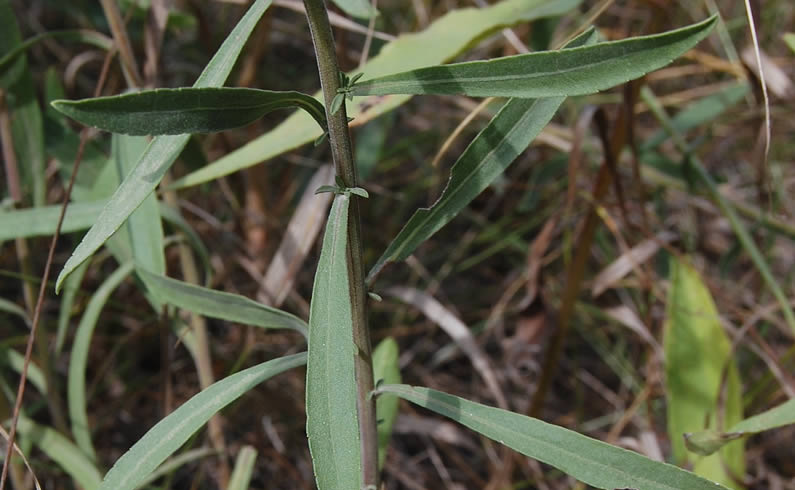
Leaves
- Basal and alternate; simple; entire or with few small teeth
- 4 inches long and ½ inch wide
- Variable in shape, from long and narrow to nearly spatulate; generally wider towards the tip and gradually taper at the base, rounded to pointed tip
- Often have small leaflets in leaf axil
- Rough texture
Stems
- Grey to green from dense short hairs, lower stem may be reddish
- Erect and unbranched
- Rough texture; short, white hairs throughout
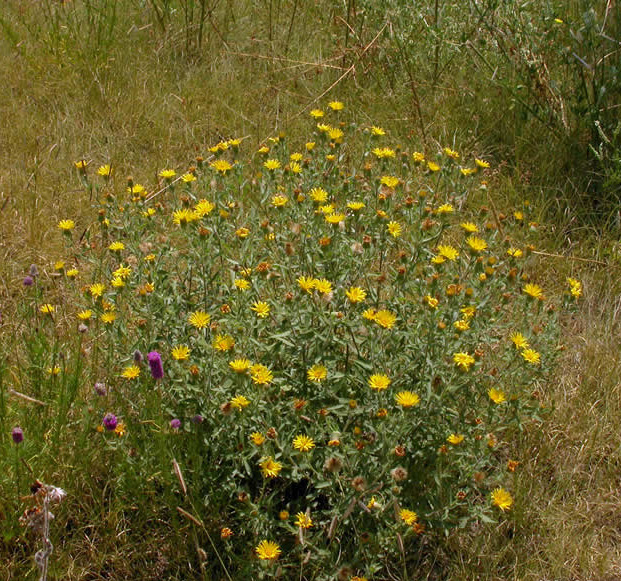
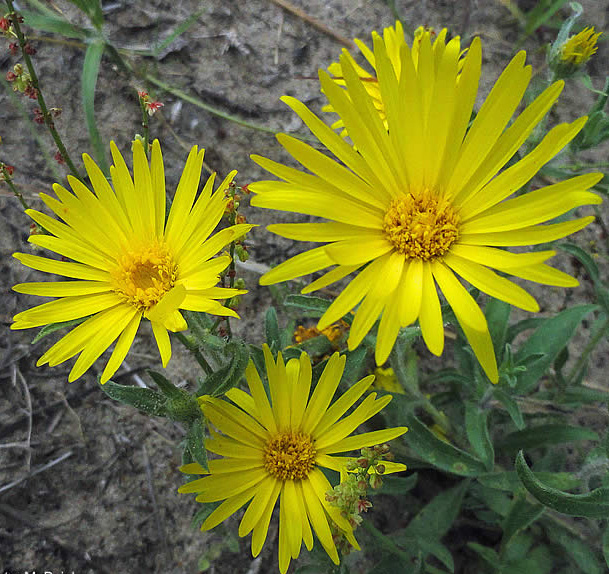
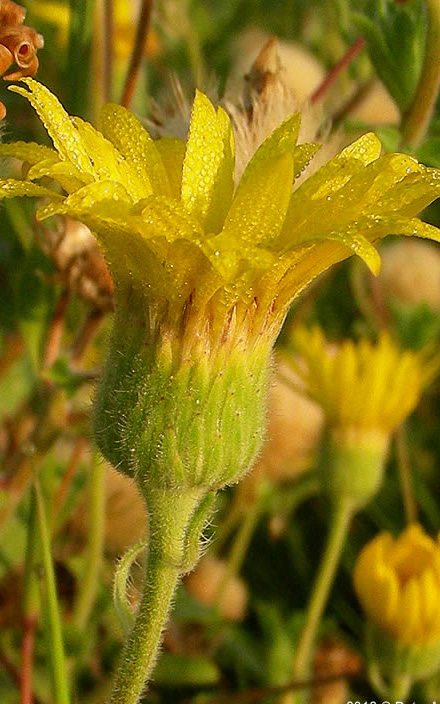
Hairy Golden Aster (Chrysopsis villosa)
Plant height 8 to 20 inches
Bloom season July to October
Habitat Sun; dry sandy soil; fields, waste areas, roadsides
Flowers
- > 7 yellow petals, yellow disk
- ¾ to 1½ inches diameter
- 1 to numerous stalked flowers at tips of branches
- 4 to 6 layers of bracts; lance to triangular; green, often with a purplish tip
Leaves
- Alternate; simple; entire
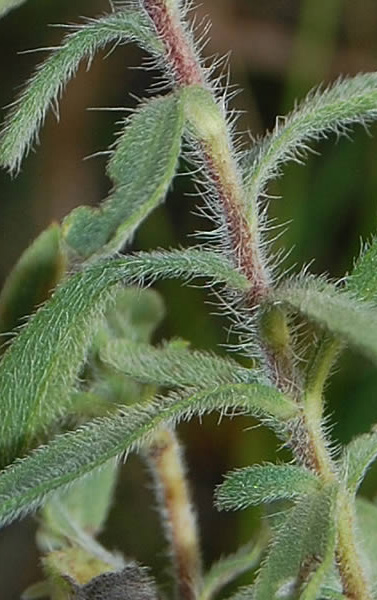
- Green to grey-green due to a dense covering of long hairs
- Oblong with a pointed to blunt tip, tapering at base; stalkless
- 1 inch long, ¼ inch wide
- Sparsely to densely covered with long, white hairs
Stems
- Green to reddish-brown
- Clustered; erect or ascending
- Typically branched
- Sparsely to densely covered in long hairs
Heart-leaved Alexanders (Zizia aptera)
Plant height 1 to 2 feet
Bloom season May to July
Habitat Part shade, sun; moist to dry prairies, thickets, open woods, shorelines
Flowers
- Tiny bright yellow flowers in compound umbels
- Compound umbels are 1 ½ to 2 ½ inches diameter; typically flat; two to several/ plant, each made up of 7 to 16 umbellets; umbellets contain up to 20 flowers
- Petals folded inward; the central flower in umbellets has a short stalk or no stalk, all other flowers are stalked
Leaves
- Basal and alternate; basal and lower leaves are simple, upper leaves are compound; finely toothed edges
- Green with a spot of purple where leaf meets stalk; basal and lower leaves are heart-shaped, upper leaves have three lance-shaped leaflets
- Distinct fine vein pattern, especially obvious on leaf underside
- Slightly glossy; smooth to sparsely haired
Stems
- Single or multiple stems from the base
- Smooth to sparsely haired
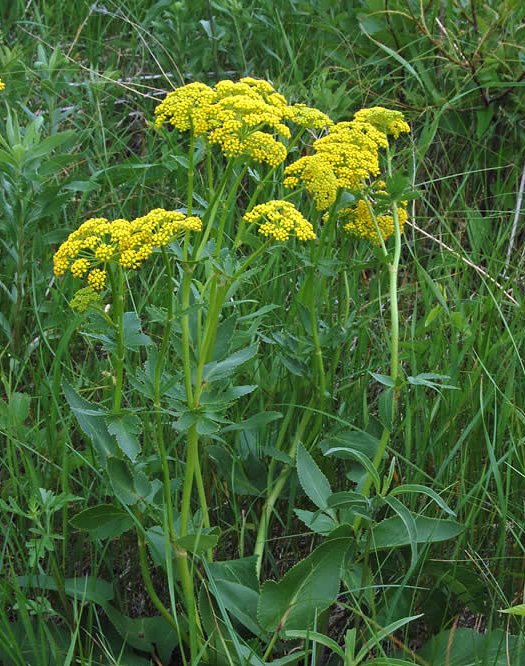
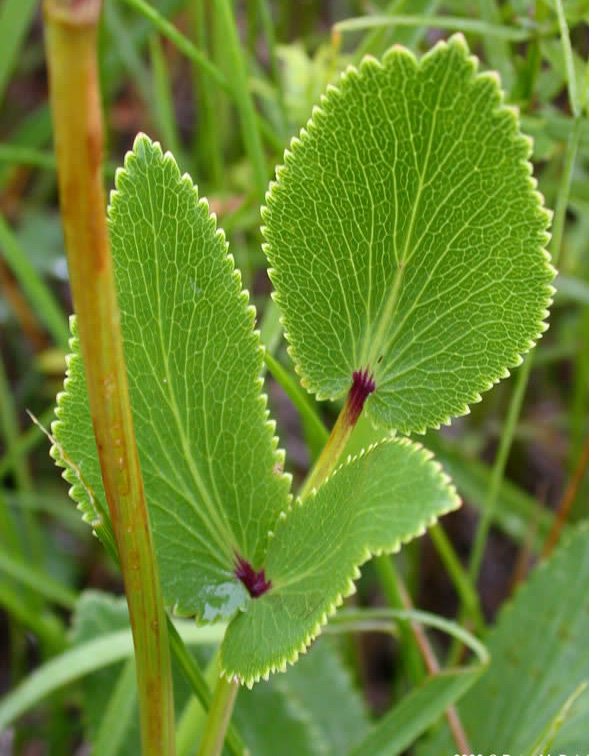
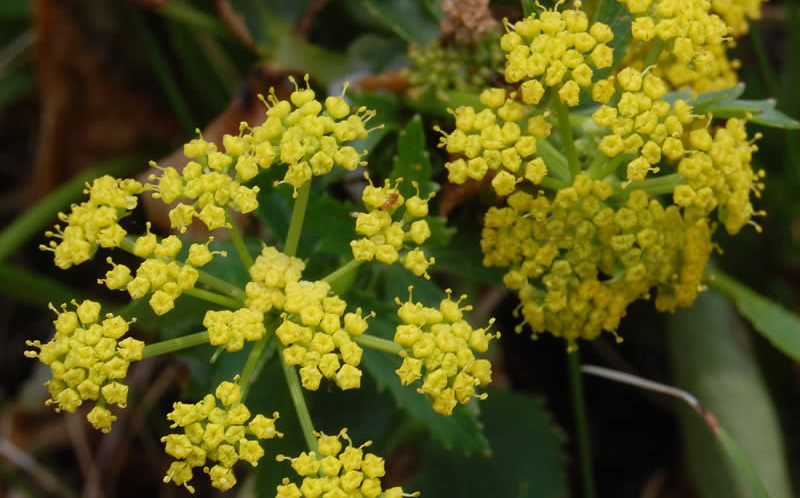
Host plants for the black swallowtail caterpillar
Compare to: Golden Alexander (Zizea aurea) and Wild Parsnip (Pastinaca sativa). All species contain yellow compound umbels; however, Golden Alexander leaves are all compound, divided 2 to 3 times (including lower leaves) and in groups of threes and Wild Parsnip contains pinnately compound leaves with 5 to 15 leaflets.
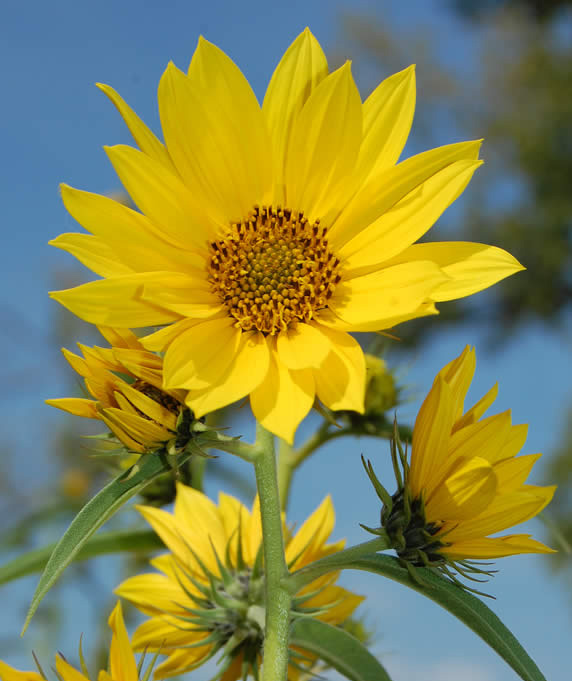
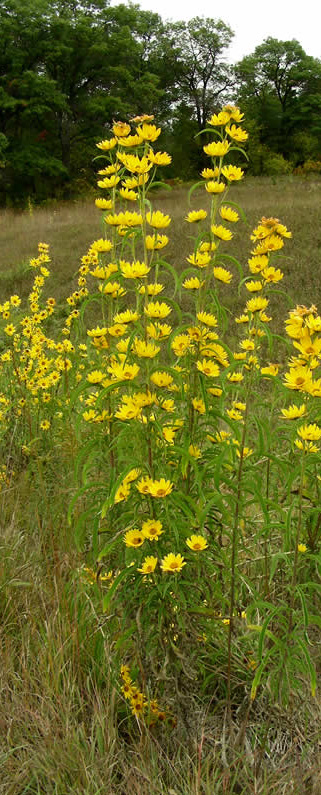
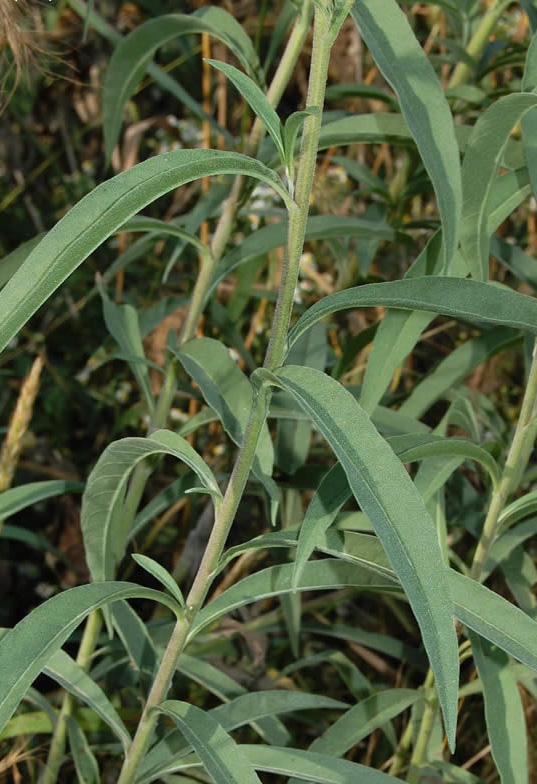
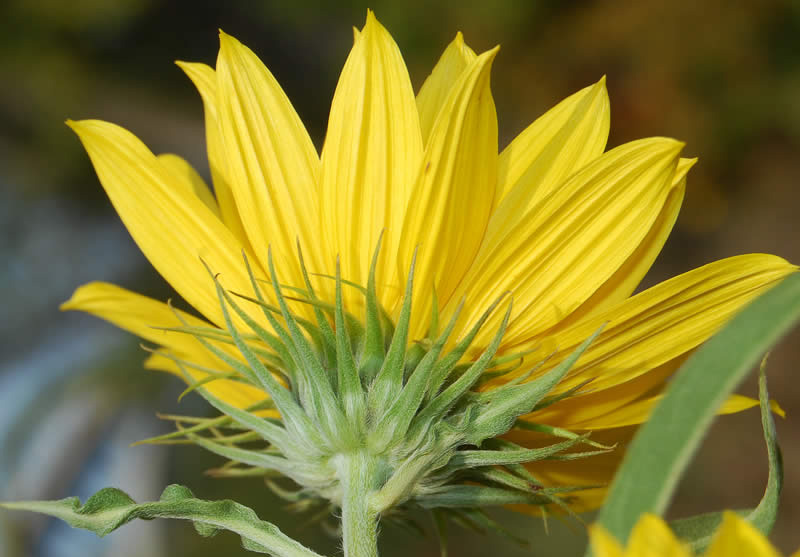
Maximilian’s Sunflower (Helianthus maximiliani)
Plant height 2 to 7 feet
Bloom season July to October
Habitat Sun; average to dry sandy soil
Flowers
- >7 yellow petals; yellow disk
- 2 to 3 inches diameter
- Loose, column shaped clusters at top of plants
- A few layers of bracts; long, narrow and spreading; covered in short hairs
Leaves
- Mostly alternate, lower leaves opposite; simple; entire or with small teeth
- Greyish green; lance-linear; arched and folded lengthwise
- 7 to 15 inches long, narrow
- Rough, like a cat’s tongue
Stems
- Green to purple
- Roughly hairy, especially near top
- Grow from short rhizomes
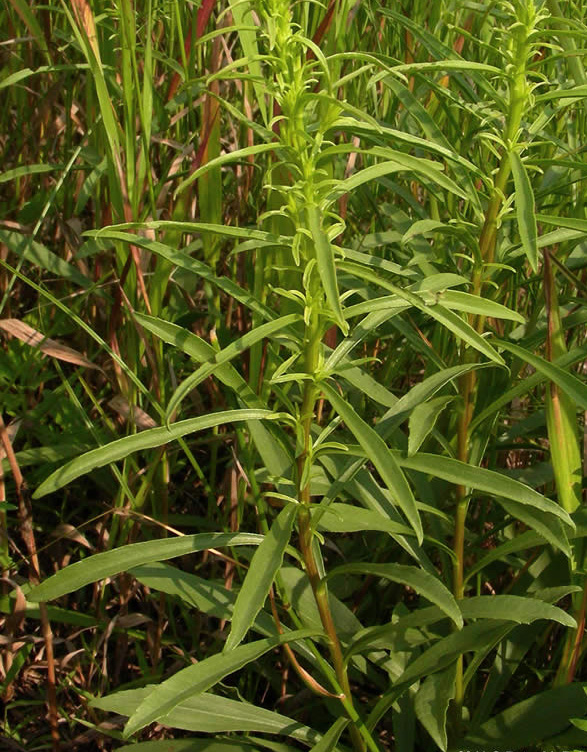
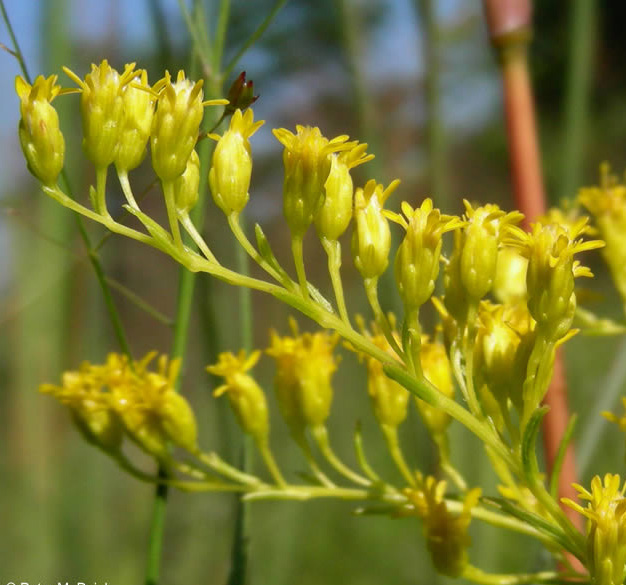
Missouri Goldenrod (Solidago missouriensis)
Plant height 6 to 20 inches
Bloom season July to September
Habitat Sun; dry sandy to gravelly soil; prairies, savannas, dunes, roadsides, railroads, bluffs
Similar species Gray Goldenrod (p. 18), which has grey to green stems and rough leaves and stem. Flower clusters are often arching near the tip.
Flowers
- >7 yellow petals; small yellow disk
- ¹⁄₈ inch diameter
Leaves
- Basal and alternate; simple; entire to finely toothed; basal leaves may be withered by flowering time
- Green; lower leaves are stalked, lance-spatulate; upper leaves are smaller, mostly stalkless and lance-linear
- 1 to 4 inches long, ¾ inch wide
- Often have small leaflets at leaf axil
- Smooth, edges with fringe of short hair; 3-veined, lower leaves 5-veined
Stems
- Often red, especially at base
- Few to many stems (40+) in a group; non-flowering plants are common (only basal leaves present)
- Erect; unbranched
- Smooth, or with short hairs in flower clusters or on lower stem
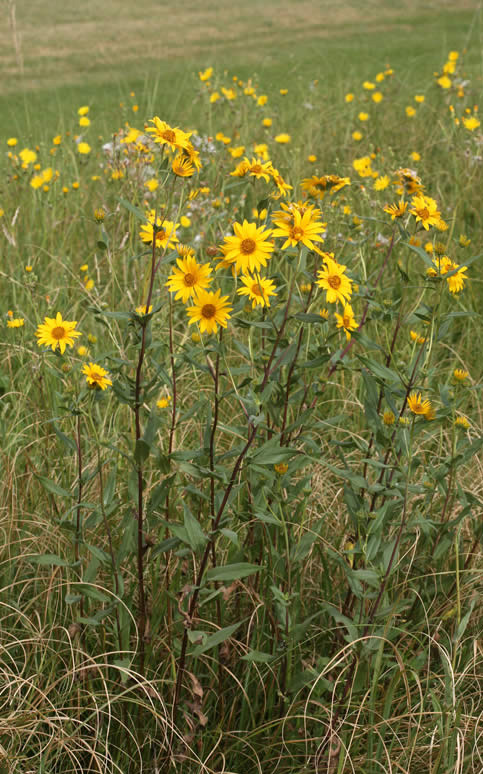
Nuttall’s Sunflower (Helianthus nuttallii)
Plant height 3 to 8 feet
Bloom season August to September
Habitat Sun; moist to wet prairies, sedge meadows, and swales
Flowers
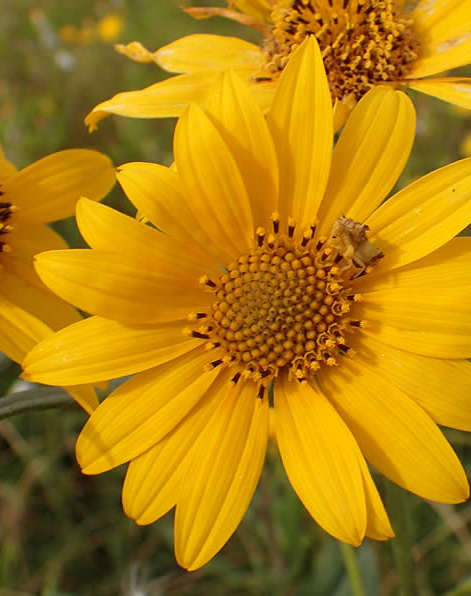
- >7 yellow petals; yellow disk
- 2 to 3 inch diameter
- 1 to 6 flowers at plant top
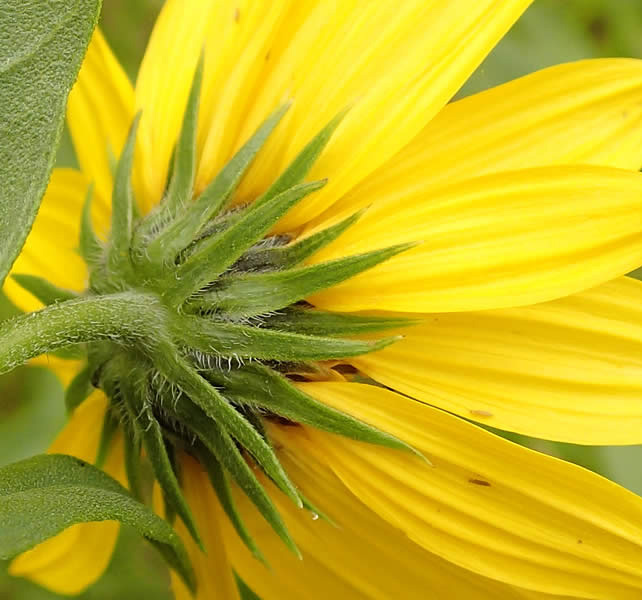
- 2 to 3 layers of bracts; narrowly triangular and pointed
Leaves
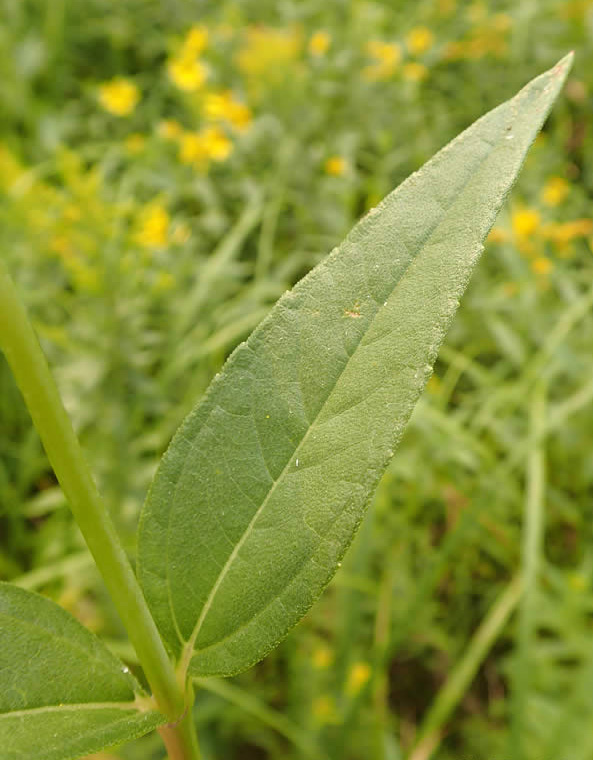
- Opposite, may be alternate on upper stem; simple; entire or shallowly toothed
- Oval-lance shaped
- 2 to 6 inches long, 1.5 inches wide
- Rough on both sides, like a cat’s tongue
Stems
- Green to yellowish, sometimes purple
- Grow from short rhizomes; erect
- Upper plant may be branched
- Hairless to covered sparsely with short hairs
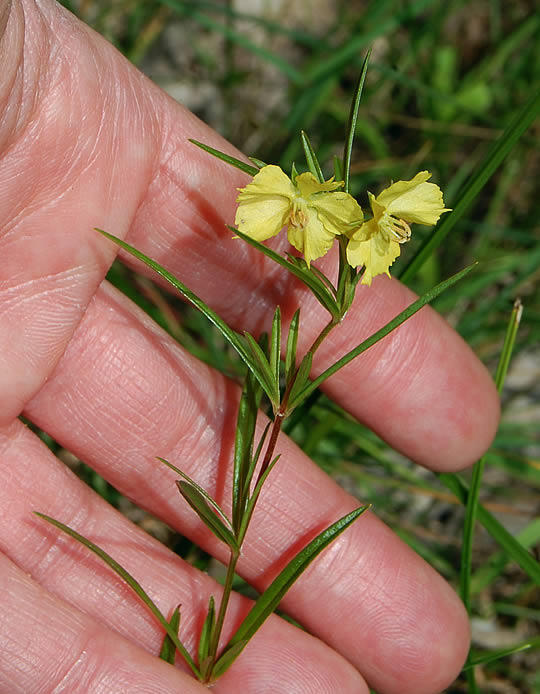
Prairie Loosestrife (Lysimachia quadriflora)
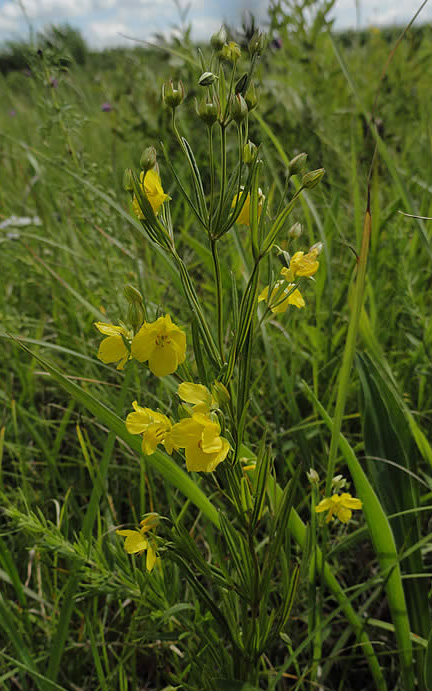
Plant height 1 to 2 feet
Bloom season July to August
Habitat Sun; wetlands, moist open prairie
Flowers
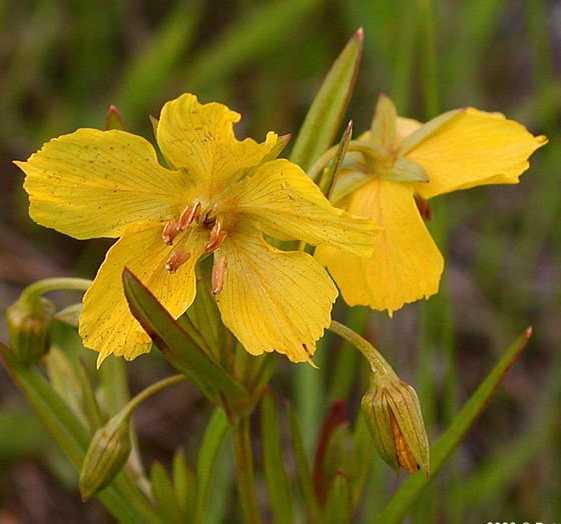
- 5 yellow petals; may have faint reddish brown streaks; rounded petals with a pointed tip, ragged/ruffled edges; 5 rusty red stamens, 5 lance shaped green sepals
- 1 inch flowers on stalks ¾ to 1 inch long
- 1 to 4 flowers in whorls on stems in the upper portion of plant; flowers face downwards
Leaves
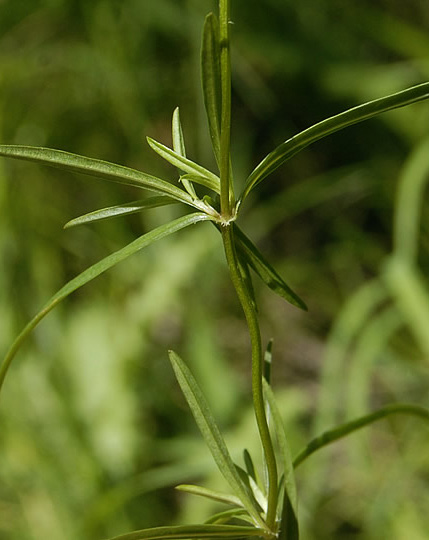
- Opposite and whorled; simple; entire
- Linear; tapered at tip and base
- 1 ¼ to 3 ½ inches long, less than ¼ inch wide; leaves in whorls are of mixed lengths
- Prominent mid-vein; edges curl under
Stems
- Unbranched to few short branches in upper stem
- Smooth and erect
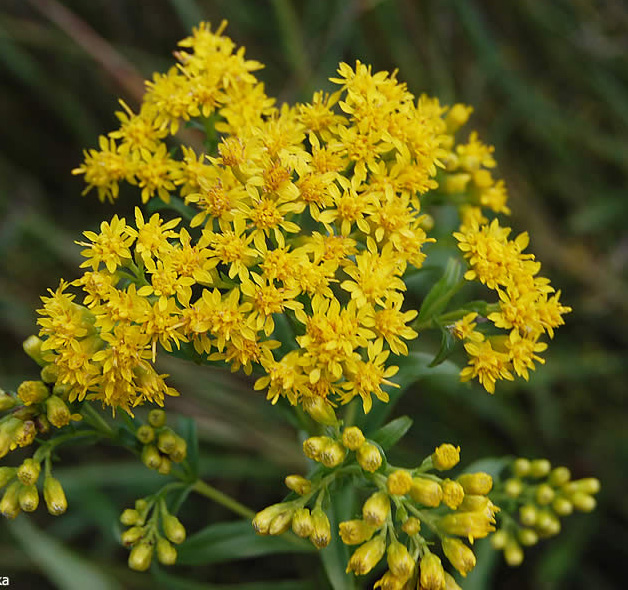
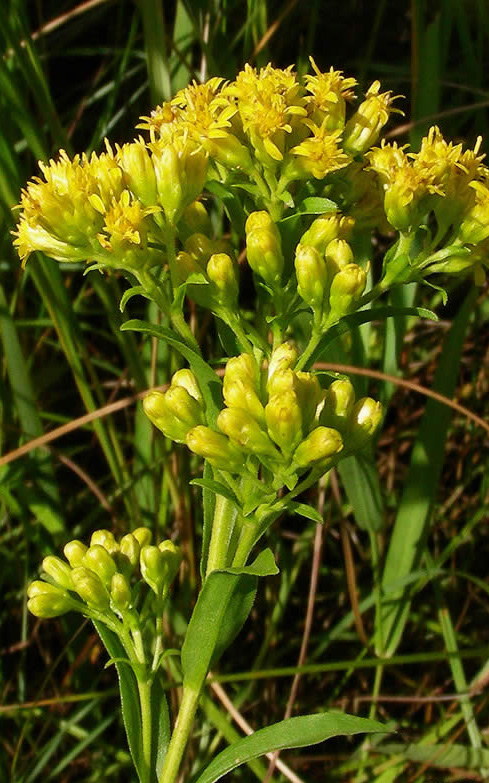
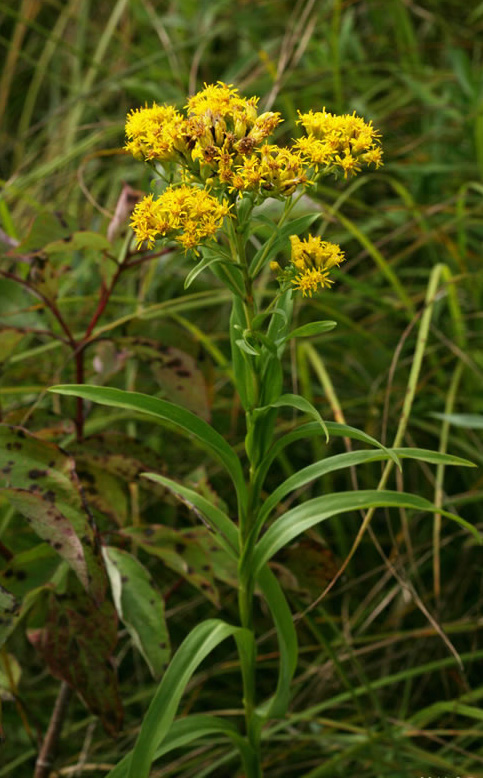
Riddell’s Goldenrod (Solidago riddellii)
Plant height 2 to 3.3 feet
Bloom season August to September
Habitat Sun; wet prairie, meadows, fens
Flowers
- > 7 yellow petals, small yellow disk
- ≥ ¼ inch wide
- Rounded, flat cluster; multiple terminal stalked clusters
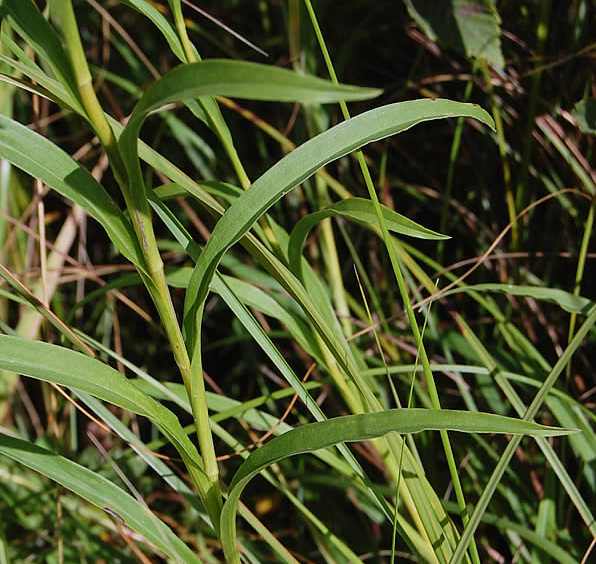
Leaves
- Basal and alternate; simple; entire with wavy edges; basal leaves typically wither away before flowering
- Yellow green; basal leaves are lance-like; leaves become progressively smaller, more lance-linear, smooth surfaced, and stalkless ascending the stem
- Stem leaves arched and folded lengthwise; leaves are stalkless and clasping (wrap around stem)
- Basal leaves up to 8 inches long, ½ inch wide; uppermost leaves 2 to 4 inches long
- Leathery texture, hairless
Stems
- Yellow green
- Unbranched, mostly erect
- Mostly hairless, may contain hairs near flower cluster
SARA Designation: Special Concern
MB ESA Designation: Threatened
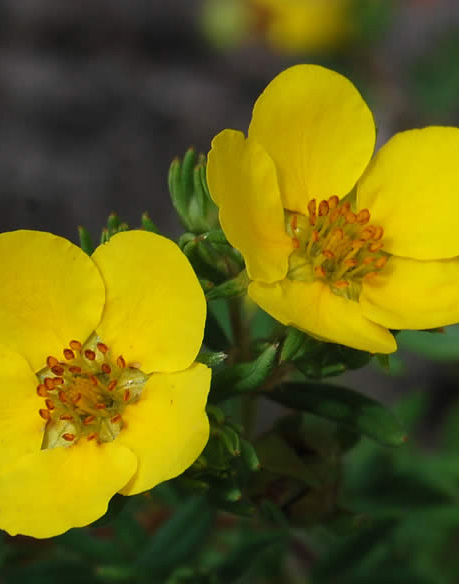
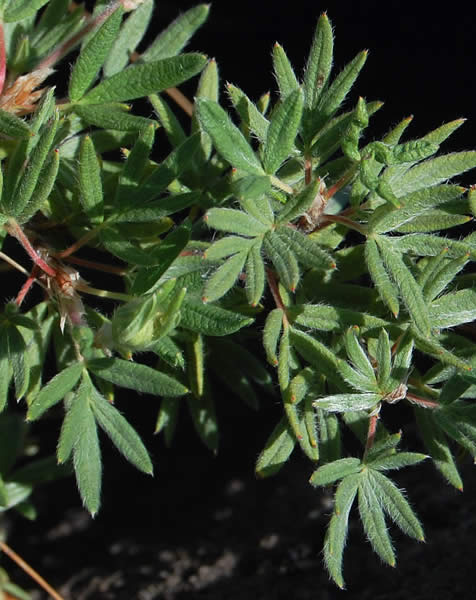
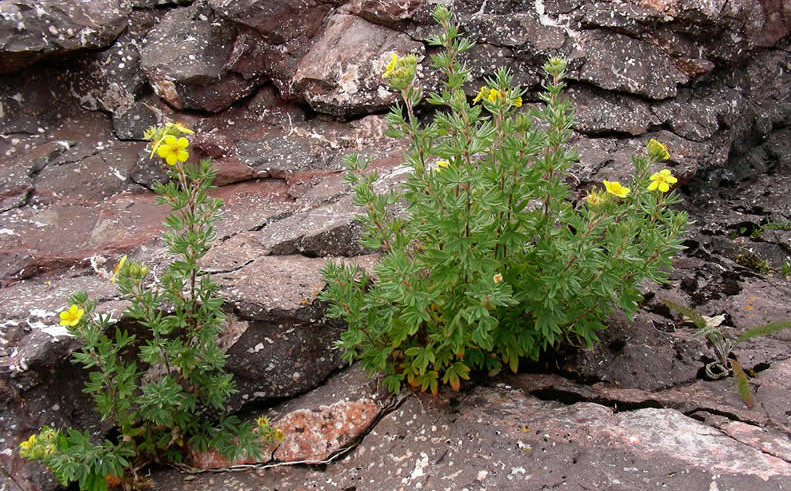
Shrubby Cinquefoil (Dasiphora fruticosa)
Plant height 1 to 3 feet
Bloom season July to September
Habitat Sun; moist thickets, wet to dry prairie, swamps, fens, rocky shores
Flowers
- 5 bright yellow petals, usually overlapping
- ¾ inch to just over 1 inch diameter
- One to several flowers in terminal clusters
Leaves
- Alternate; pinnately compound, with 3 to 7 closely crowded leaflets in a spreading arrangement; smooth edges
- Entire leaf is 1 inch long and wide
Stems
- Woody stems are greyish brown with shredding bark
- Young branches are red to purplish brown with fine hairs throughout
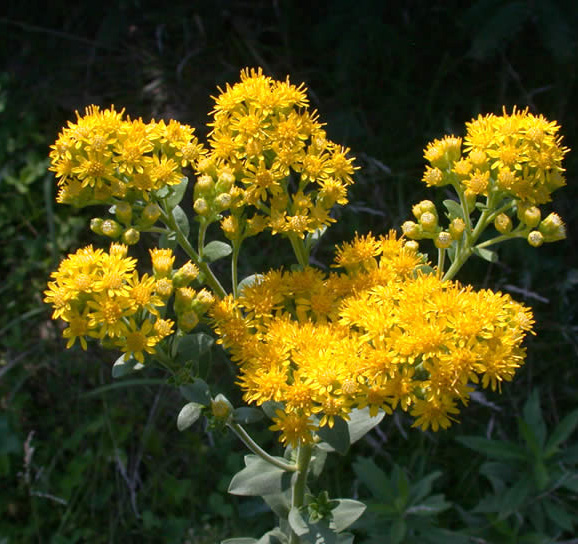
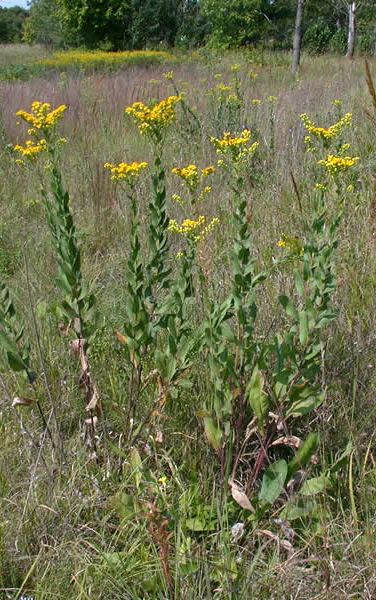
Stiff Goldenrod (Solidago rigida)
Plant height 1 to 2 feet
Bloom season August to October
Habitat Sun; average to dry fields, prairies, roadsides
Flowers
- 6 to ≥7 yellow petals; yellow disk
- < ½ inch diameter
- Flat clusters; 2 to 5 inches wide
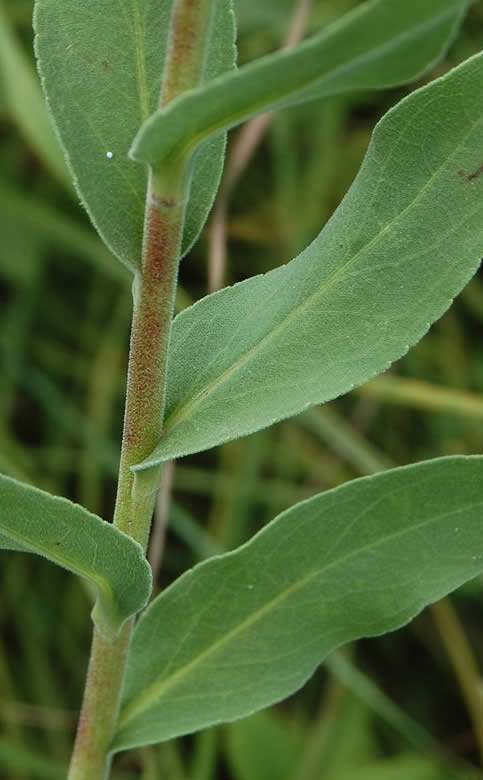
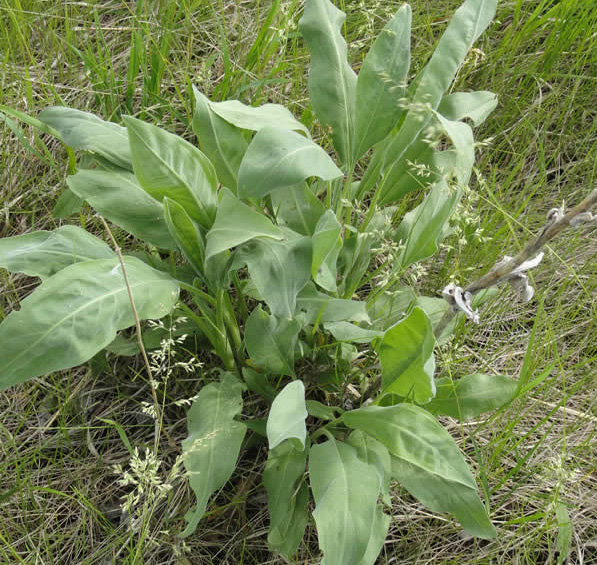
Leaves
- Basal and alternate; simple; entire, may have wavy edges
- Grey-green; elliptical-oval, upper leaves may have wavy edges; lower leaves abruptly taper at base, upper leaves clasp stem
- Lower leaves 3 to 8 inches long, up to 2 inches wide; upper leaves 2 inches long
- Moderately stiff; dense short hairs give rough, sometimes fuzzy texture
Stems
- Yellow green, often blushed with red
- Single to many from base
- Unbranched or branched at top
- Strong, thick stem with rough fine hairs
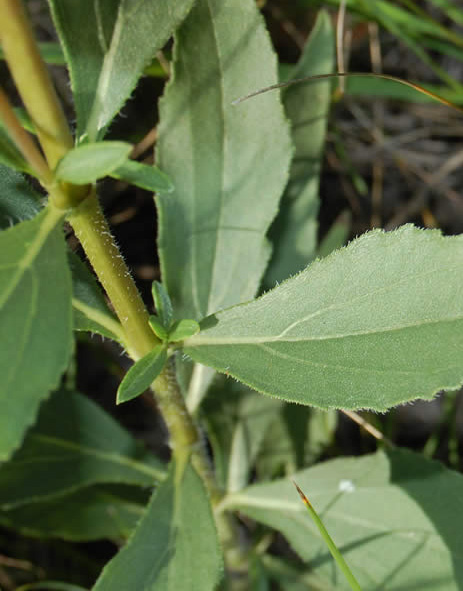
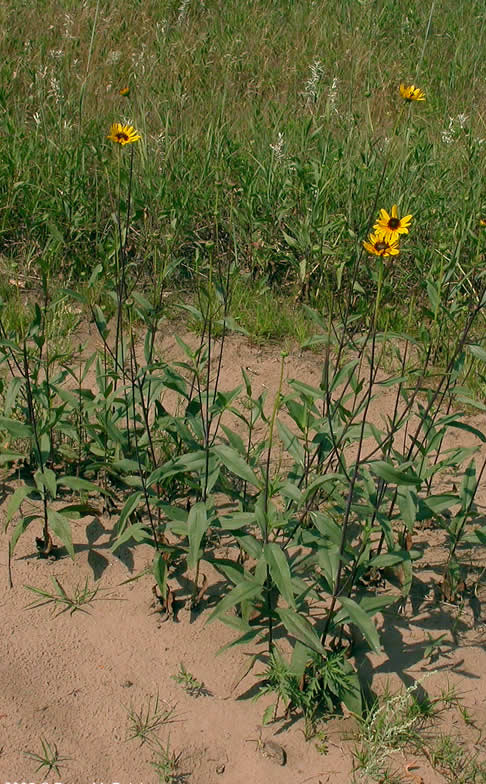
Stiff Sunflower (Helianthus pauciflorus)
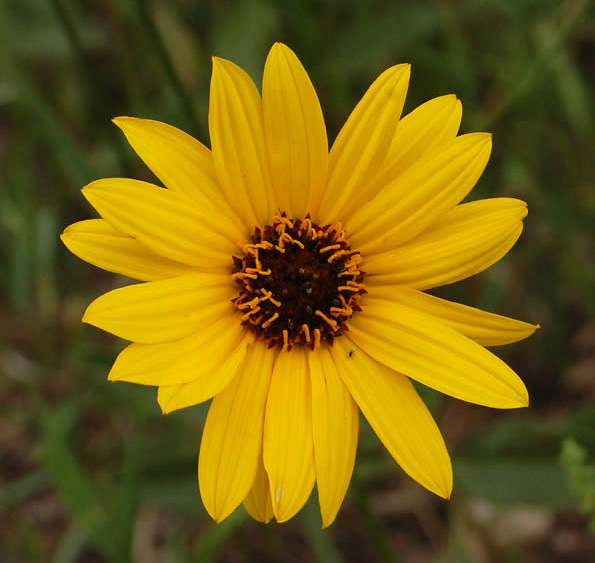
Plant height 2 to 3 feet
Bloom season August to September
Habitat Sun; average to dry prairies, roadsides, along railroads
Flowers
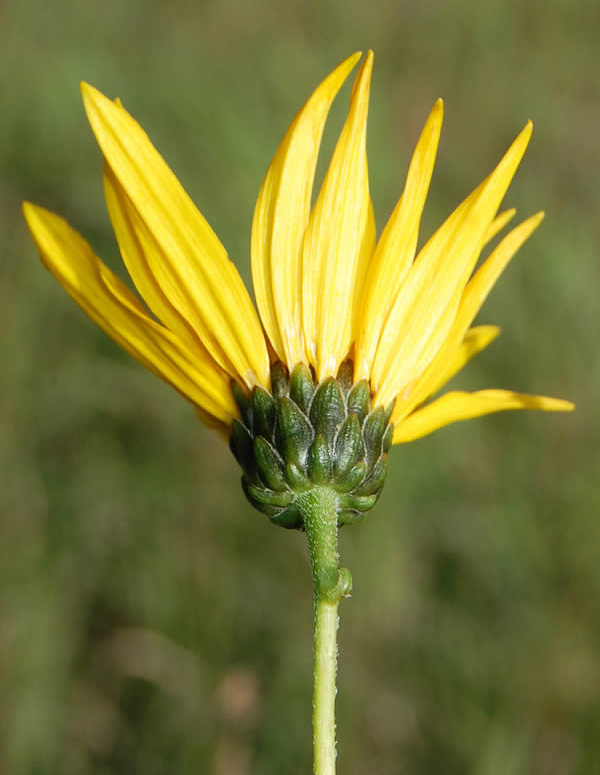
- >7 yellow petals; purple-brown disk (sometimes yellow)
- 2 to 3½ inch diameter
- 1 to several flowers per plant at the end of long, erect stalks
- Bracts are short, wide, and flattened
- When the weather is dry, the petals fold up lengthwise or become twisted
Leaves
- Opposite and large on lower stem, small and alternate above the middle; simple; shallow and wide teeth
- Dull grey-green to olive; lance-shaped, small leaves may be more oval
- 2 to 4 inches long, ¾ to 2¼ inches wide
- Rough on both sides, short hairs along edges; 3 distinct veins
Stems
- Green, turning reddish-brown with age
- Grow from rhizomes, forming colonies
- Unbranched
- Bristled throughout
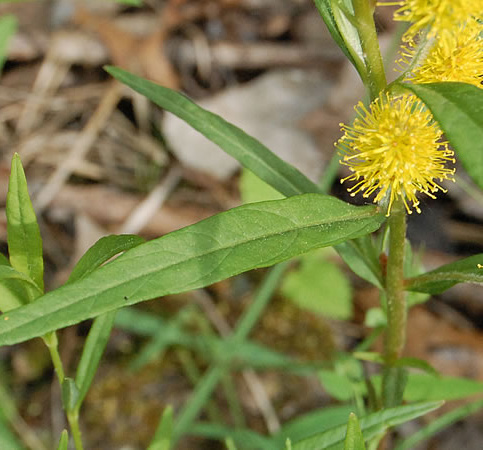
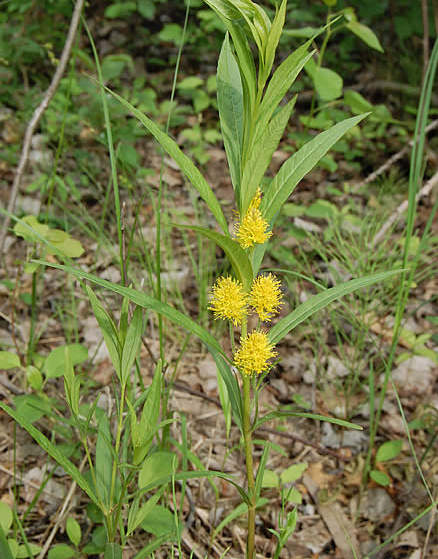
Tufted Loosestrife (Lysimachia thyrsiflora)
Plant height 12 to 20 inches
Bloom season May to July
Habitat Part shade, sun; bogs, swamps, wet fields
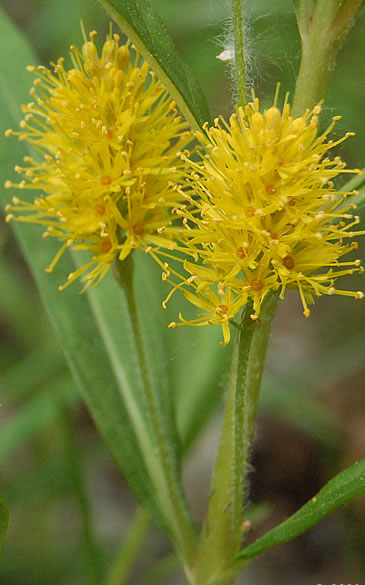
Flowers
- Narrow yellow petals, 6 per flower; 6 yellow stamens, longer than petals and an orange ovary in center
- Round clusters of flowers, 1 ½ inches long, flowers are 1⁄₃ inch diameter
- Few to many flower clusters per stem from middle leaf axils, no flowers at top of plant
Leaves
- Opposite; simple; entire
- Stalkless; lance-linear, becoming very short and small in lower parts of plant
- 5 inches long, ¾ inch wide
- May have fine hairs along middle vein and lower surface
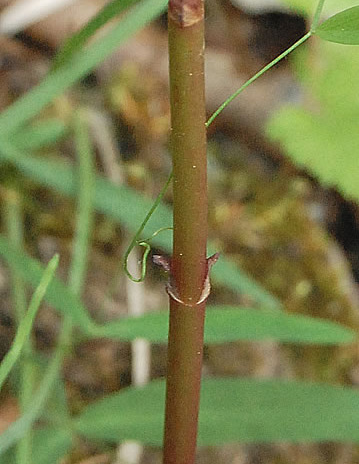
Stems
- Green to reddish
- Single
- Unbranched
- Smooth at base, hairy towards top