Prominent foliage
Not all prairie plants stand out because of their flowers, some are best identified by their leaves and stems. This section focuses on species where foliage is the most distinguishing feature. These hardy plants often play critical roles in prairie ecosystems, even when not in bloom.
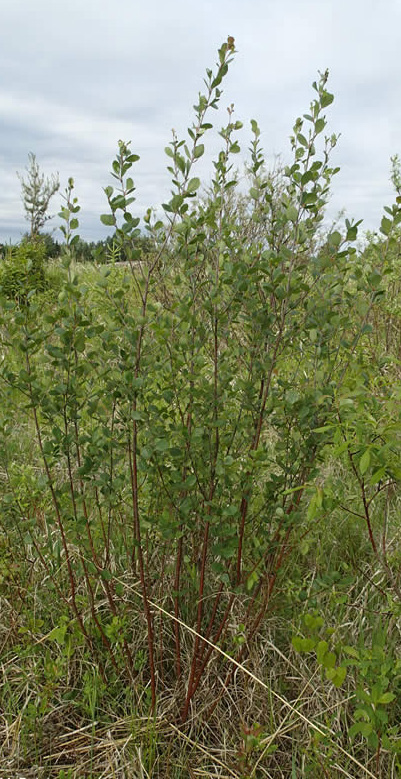
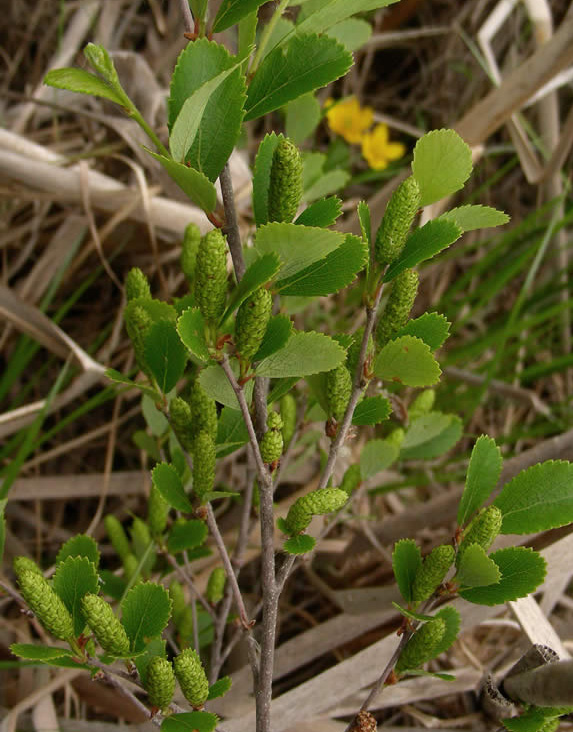
Bog Birch (Betula pumila)
Plant height 41 to 8 feet (rarely 9 to 10 ft)
Bloom season April to May
Habitat Sun to part shade; moist soil; open bogs, fens, peatlands, swamps, wet prairies and meadows, wet poplar woods
Flowers
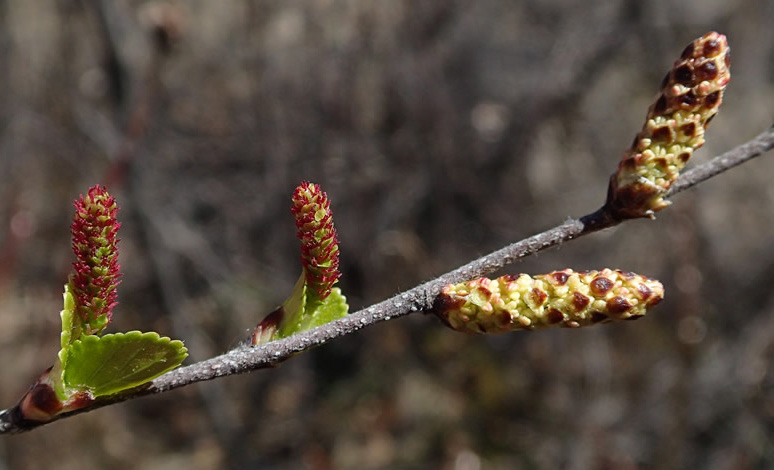
- Flowers in catkins (cylindrical clusters with no petals or sepals)
- Blunt, stiff bracts are main structures visible; stamens and pistils protrude beyond bracts
- Many catkins alternate along twigs
- Catkins erect, ascending or pendent
Leaves
- Alternate; simple; round to sharp teeth
- Dark green upper surface, light green lower surface; round-spatulate
- ¾ to 1 ½ inch long, ½ to 1 inch wide
- Hairless to sparsely haired; surface may be dotted with glands
Stems
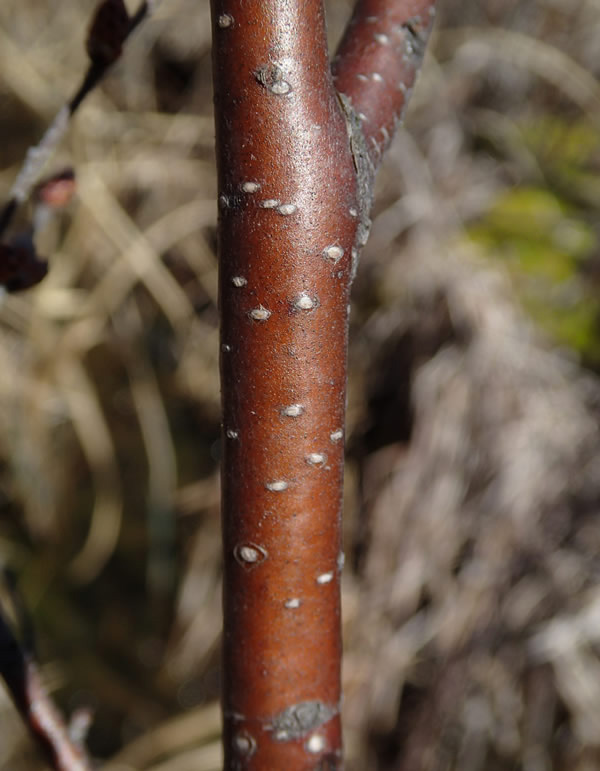
- Brown to reddish brown woody stems, older stems may be greyish; woody stems have pale, raised pores, younger stems are hairy
- Stems in bunches
- Short lateral branches with 2 to 3 leaves
Pasture Sage (Artemisia frigida)
Plant height 4 to 16 inches
Bloom season July to September
Habitat Sun; dry prairie
Similar species Prairie Sage (p. 90), which has entire leaves that are elliptical to lance linear.
Flowers
- Small yellow flowers; hanging downwards (bracts often most visible)
- 1 ⁄₈ inch diameter; indistinct shape with a short stalk
- Abundant flowers in erect clusters
- Silvery green bracts with fine silky hairs
Leaves
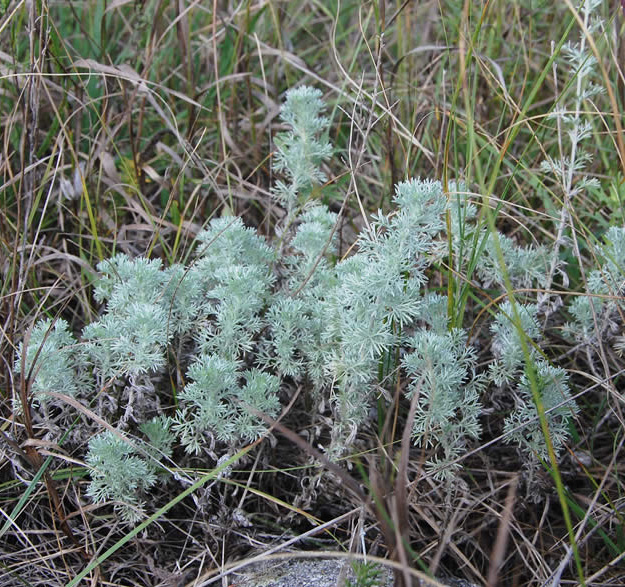
- Alternate; simple; divided 2 to 3 times into linear segments, deep leaf divisions make plant appear feathery
- Silvery green to blue green from dense, silky hairs; upper leaves stalkless, lower leaves short-stalked
- ½ to 1 ½ inches long
- Sage aroma when handled
Stems
- Silvery green to blue green from dense, silky hairs
- Multiple stems from base
- Upper plant usually with many branches
- Lower stem becomes stiff and woody with age, upper branches are slender and erect
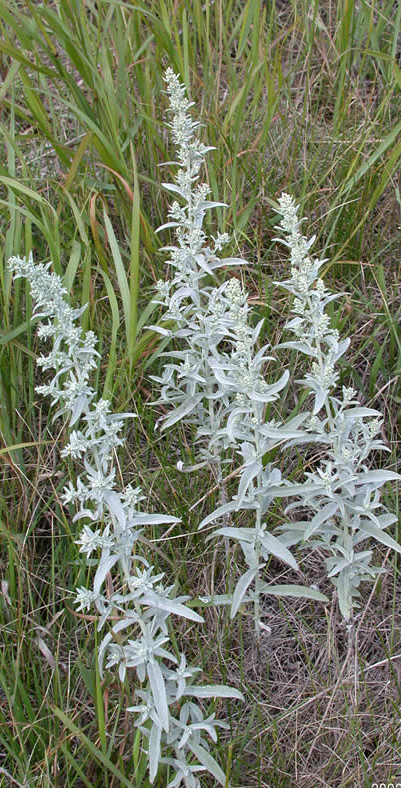
Prairie Sage (Artemisia ludoviciana)
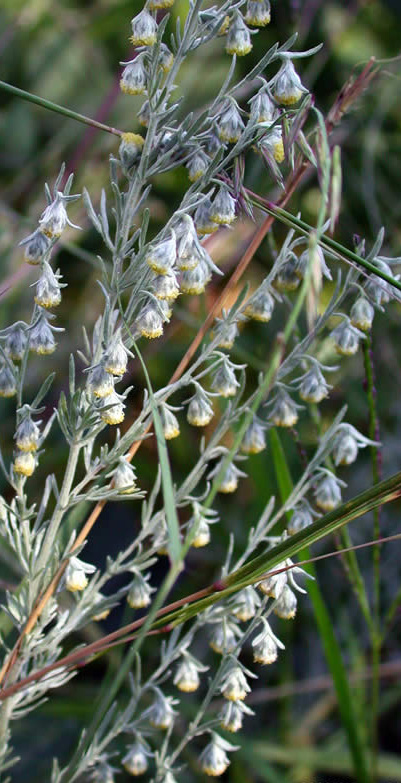
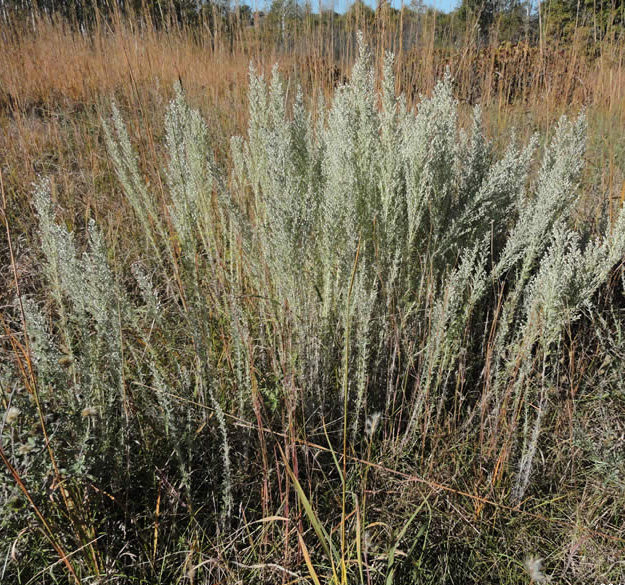
Plant height 1 to 2 feet
Bloom season July to October
Habitat Sun; average to dry; open prairies, roadsides
Similar species Pasture Sage (p. 88), which has leaves divided 2 to 3 times into linear segments. Deep leaf divisions make plant appear feathery.
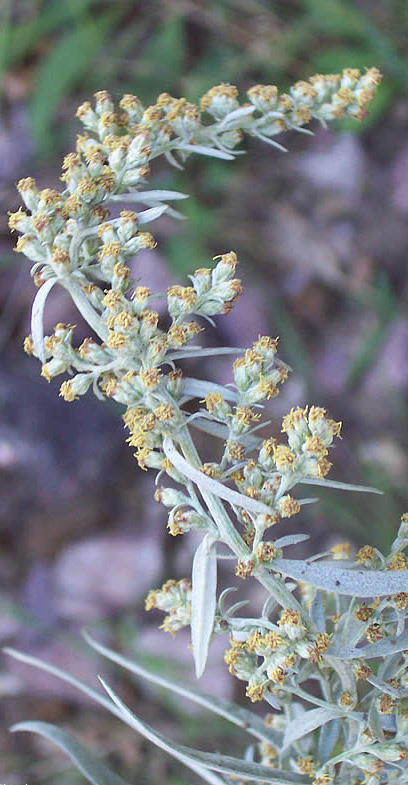
Flowers
- Numerous dusty yellow flowers crowded in terminal leaf axils
- 1⁄₈ inch diameter, arising from leaf axils
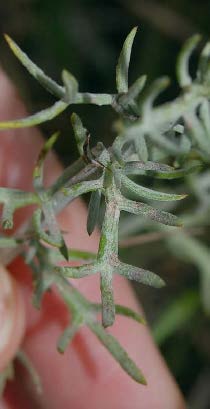
Leaves
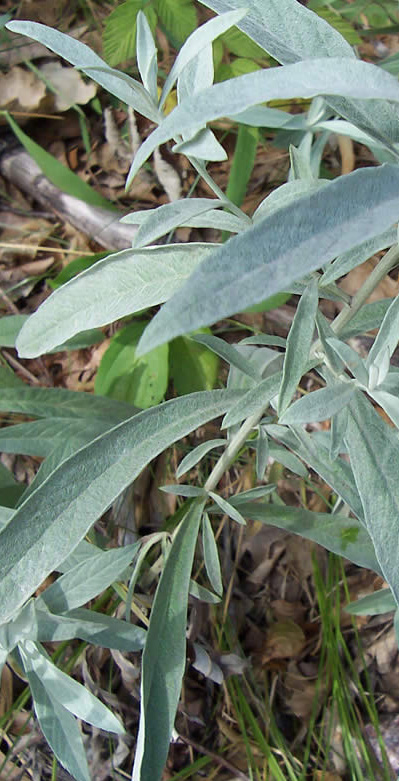
- Alternate; simple; entire, lower leaves often have lobed tips
- Silvery green to whitish from dense, somewhat wooly, hairs, elliptical to lance-linear; stalkless
- Up to 3 inches long, ½ inch wide
- Sage aroma when crushed
Stems
- Grey-green from dense, matted hairs
- Grow from rhizomes, sometimes forming dense colonies
- Unbranched to many branches