Pink/purple flowers
This section showcases the colorful diversity of the prairie with vibrant pink and purple blooms. From blazing stars to milkweed, these flowers often attract butterflies and bees. Use this section of the guide to differentiate between the stunning variations found within this colorful group.
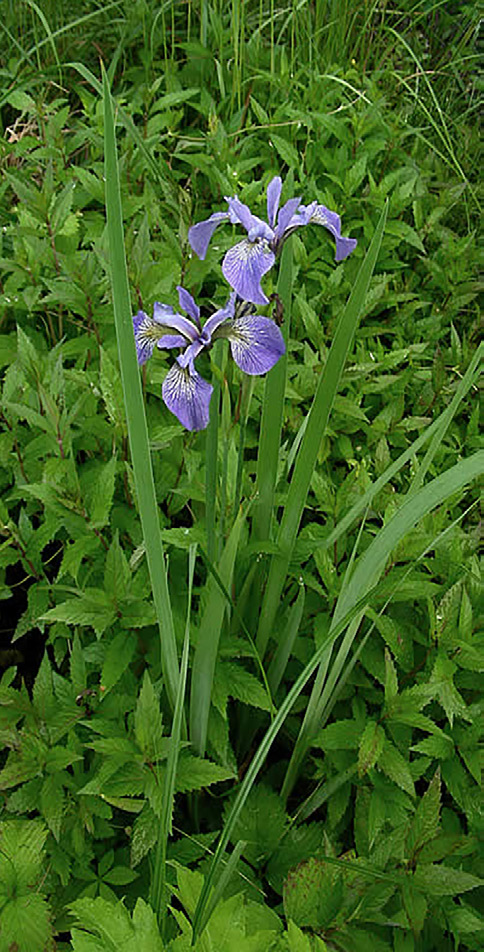
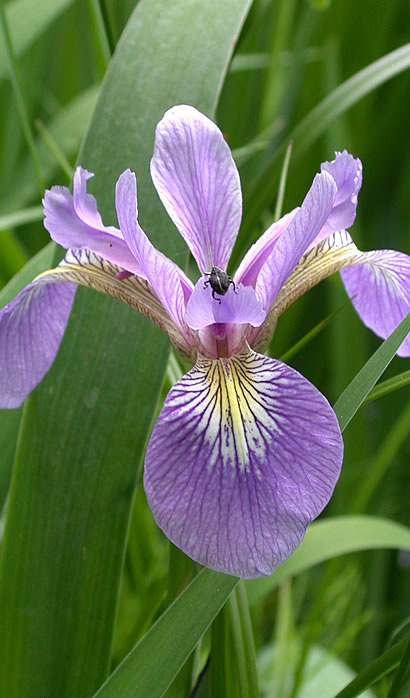
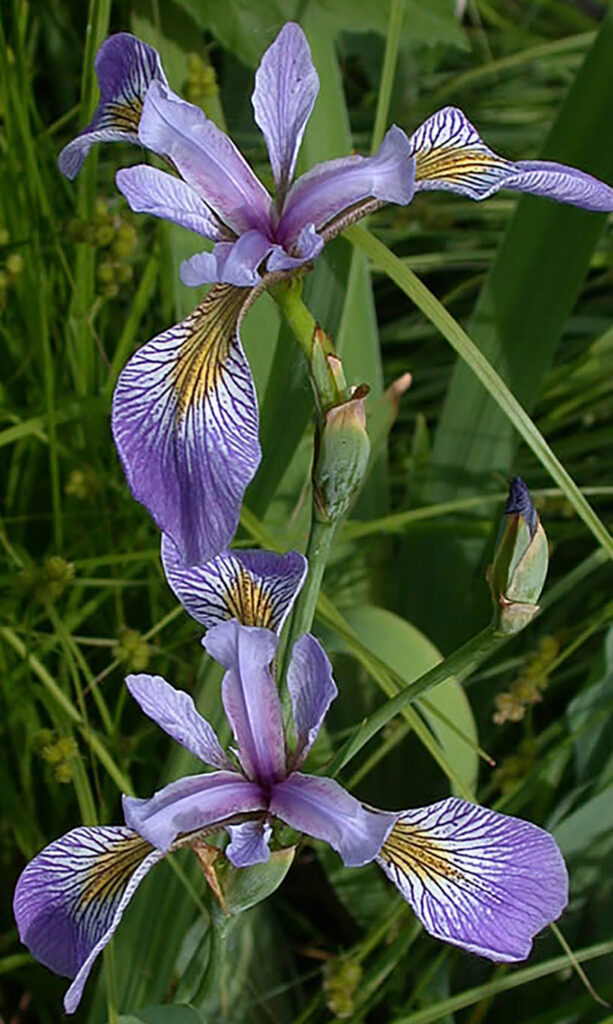
Blue Flag (Iris versicolor)
Plant height 12 to 32 inches
Bloom season May to June
Habitat Part shade, sun; wet meadows and woods, marshes, shores
Flowers
- Blue-violet; 3 large petal-like sepals with a white and yellow base and purple veins; petals are smaller than sepals; pistils are petal-like, about as long as the petals; stamens are hidden in-between pistils and sepals
- 3 to 4 inch in diameter; large sepals drooping; smaller petals are erect or drooping
- One to a few flowers per stalk
Leaves
- Up to three sword-like leaves arising from a flattened base; simple; entire
- Green, may be purplish red at base; linear; erect or arching
- 1 inch wide, 12 to 30 inches long
- Smooth surface; linear, parallel veins
Stems
- Green
- Erect, 1 to 2 flowering stems from base
- Smooth, waxy
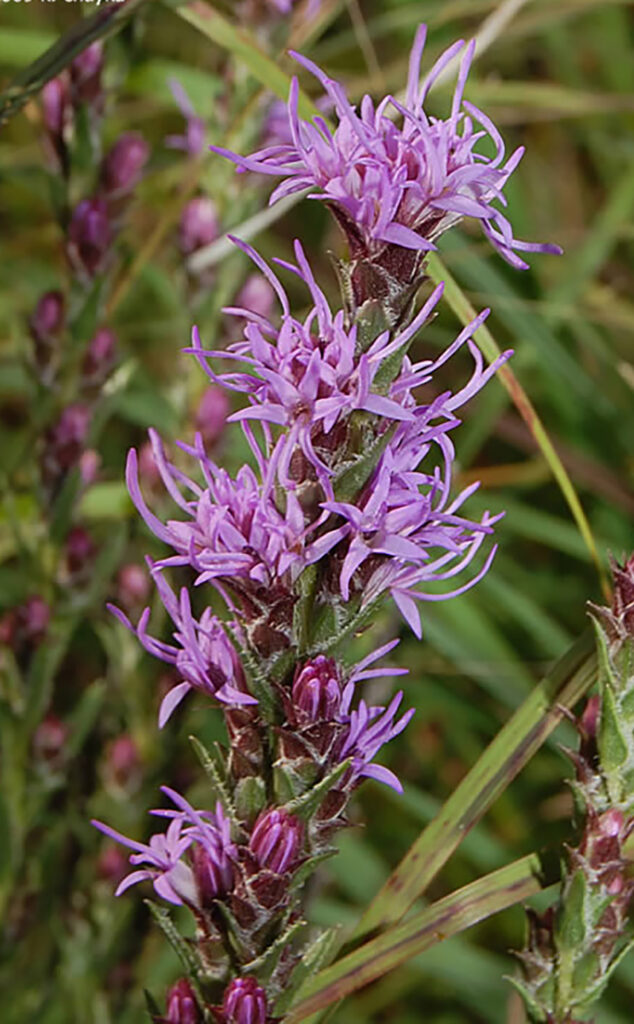
Dotted Blazing Star (Liatris punctata)
Plant height 6 to 18 inches
Bloom season August to September
Habitat Sun; dry, sandy prairies
Similar species Meadow Blazing Star (p. 72), which has flowers arranged into
1 to numerous stalked flower clusters.
Flowers
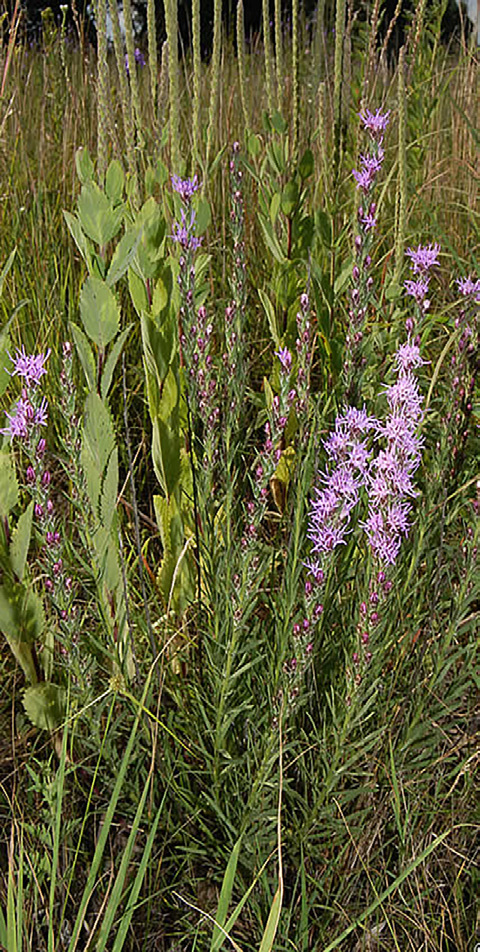
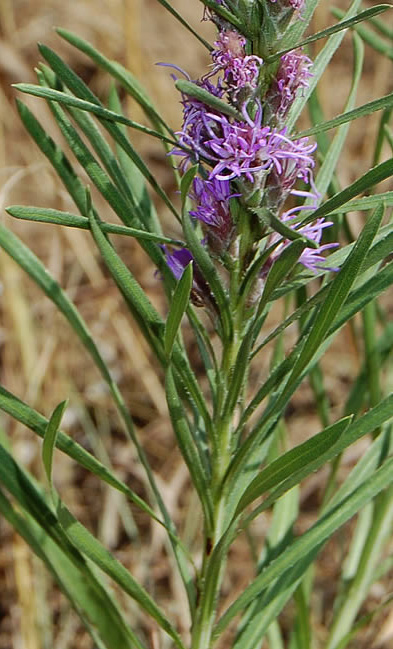
- Pink to purple petals with a long thread-like pistil; star shaped flowers
- Small clusters of 3 to 8 flowers form a larger, tightly packed, cylindrical cluster up to 8 inches long; clusters bloom top to bottom
- Bracts are green to purple
Leaves
- Alternate and basal; simple; entire
- 1-nerved; covered in white dots of resin; narrow and grass like and densely packed around stem; tend to point upwards, but may spiral at the base
- Up to 3 inches long, ¼ inch wide
- Have short white hairs around edges
Stems
- Green to red
- Normally in bunches
- Unbranched
- Hairless
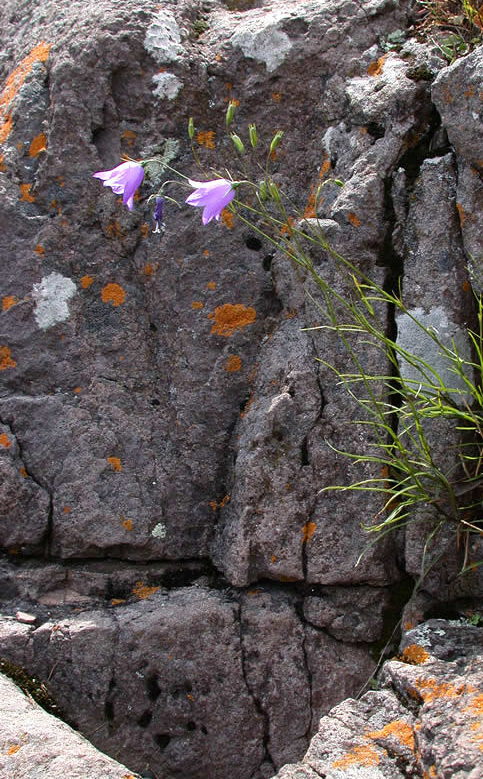
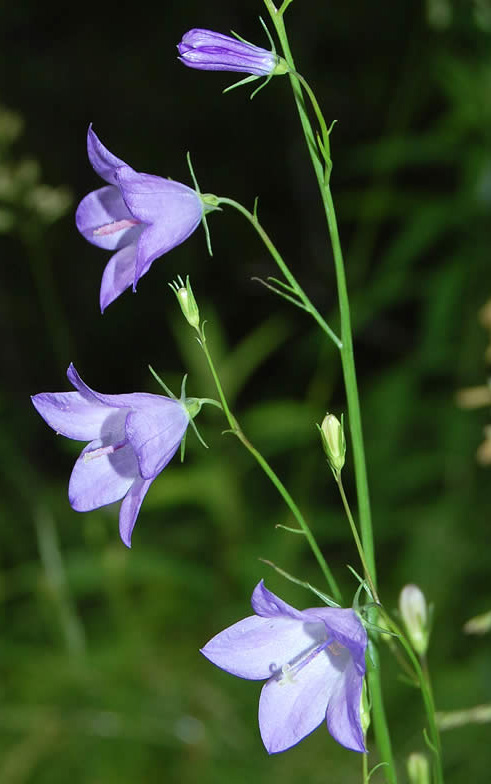
Harebell (Campanula rotundifolia)
Plant height 6 to 20 inches
Bloom season June to October
Habitat Part shade, sun; rocky slopes, open woods, average to dry meadows
Flowers
- Pale blue to violet bell-shaped flowers with 5 pointed and flaring lobes
- Approximately ¾ inch long
- One to several on slightly arched flower stalks at top of the stem
- Hairless stalks
- Long pistil has a 3-lobed stigma
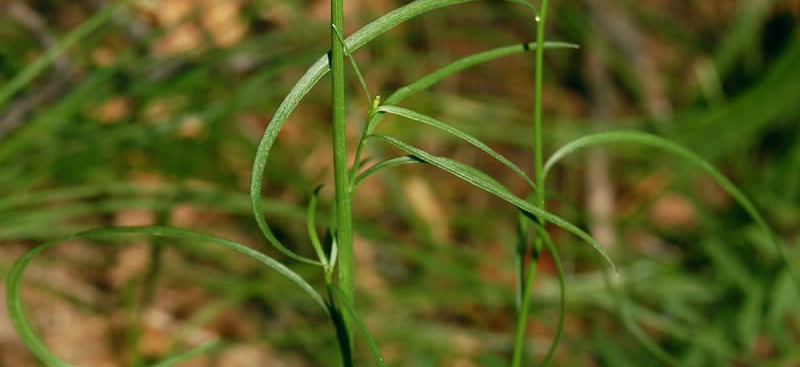
Leaves
- Basal and alternate; simple; entire, basal leaves may have large teeth
- Basal leaves are round to heart-shaped and up to 1 inch long with have long stalks; basal leaves disappear as stalks develop
- Stem leaves are linear and up to 3 inches long, stalkless
- Leaves become narrower ascending the stem
Stems
- Multiple stems from base
- Slender, unbranched (except for the flowers)
- Typically, hairless
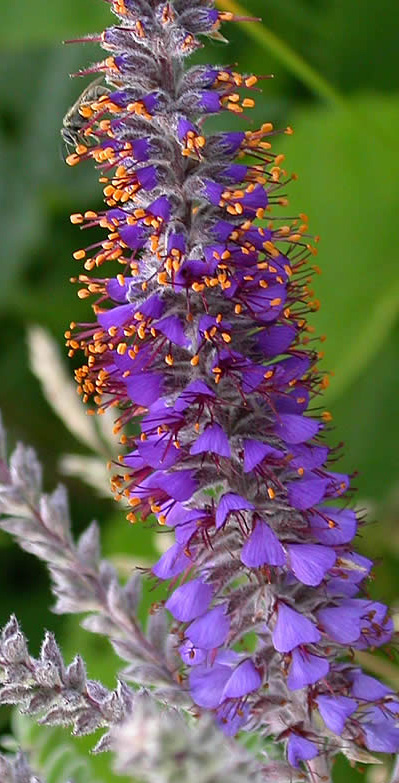
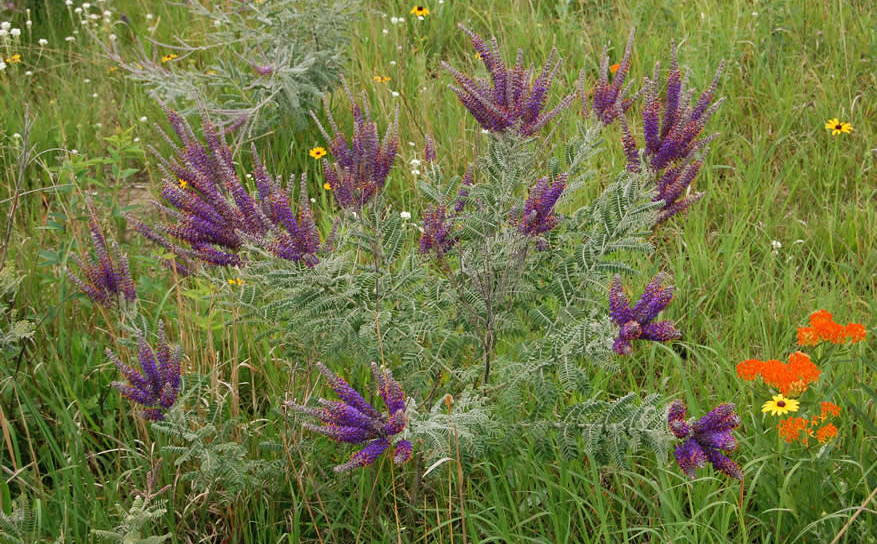
Leadplant (Amorpha canescens)
Plant height 1 to 3 feet
Bloom season July to August
Habitat Sun; dry prairies, sandy open woods, sand and gravel ridges
Flowers
- Purple petals; yellow-orange anthers; stamens extend beyond petals
- Flowers are ¼ inch long
- Upper petal creates tube around stamens and flattens after pollination
- Flowers densely clustered in long spikes 1 to 6 inches long
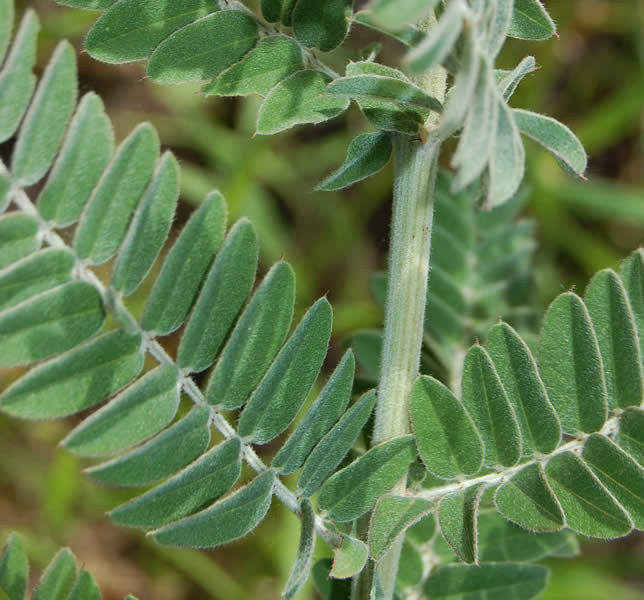
Leaves
- Alternate; compound; smooth edges
- Grey-green from dense white hairs, giving it a woolly appearance
- 2 to 4 inches long with 21 to 31 oval leaflets ¾ inch long
Stems
- Main stem woody and brown, branching stems are grey green from fine white hairs
- Branching
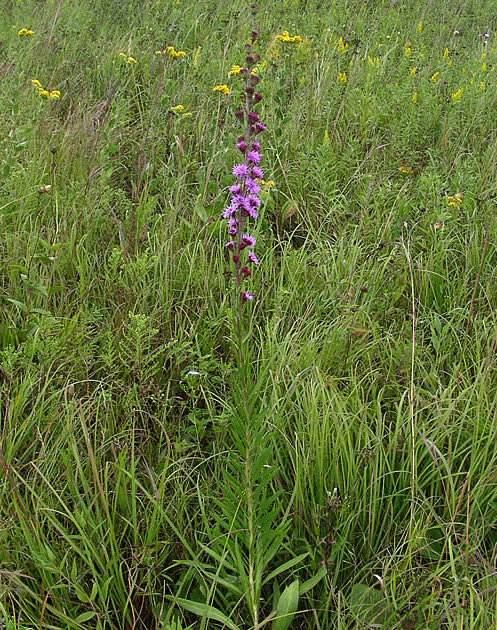
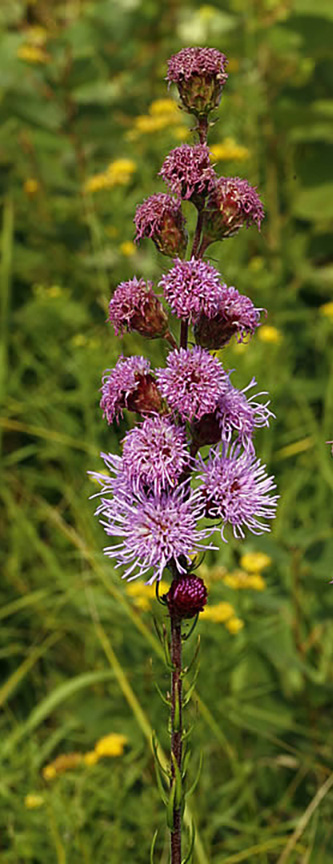
Meadow Blazing Star (Liatris ligulistylis)
Plant height 12 to 40 inches
Bloom season August to September
Habitat Sun; moist to average soil; prairies, meadows, streambanks, clearings, roadsides, ditches
Similar species Dotted Blazing Star (p. 66), which has flowers organized into small clusters of 3-8 flowers without stalks.
Flowers
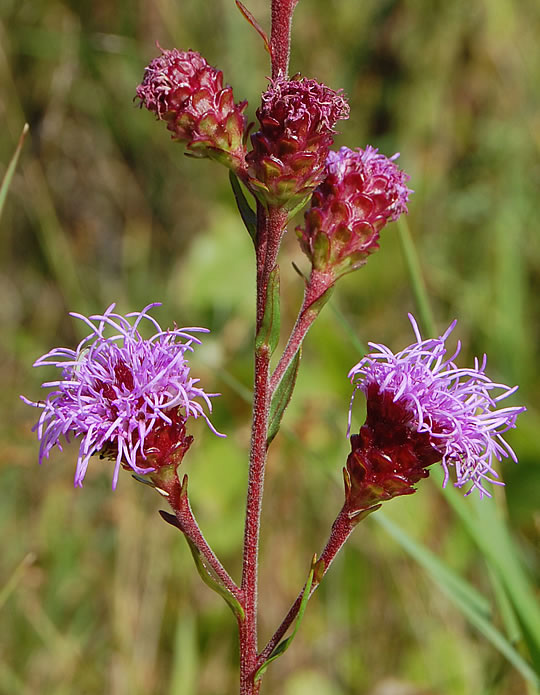
- Star shaped flowers organized into 1 to 40 (typically 3 to 10) stalked flower clusters; flower clusters contain 30 to 100 flowers; each flower contains a long pinkish purple, thread-like pistil
- ¾ to 1 inch diameter
- 4 to 5 layers of bracts, round to spatula-shaped with a round tip, purple or tinged with purple
Leaves
- Alternate and basal; simple; entire
- Green; lower leaves are oblong-elliptic to oblong spatulate; basal and lower leaves wither by flowering time
- 32 to 6 inches long, 1 inch wide, progressively smaller ascending stem, bract-like size in upper stem
- Covered in short white hairs
Stems
- Often deep red
- Single and unbranched
- Sparsely to densely covered with short hairs
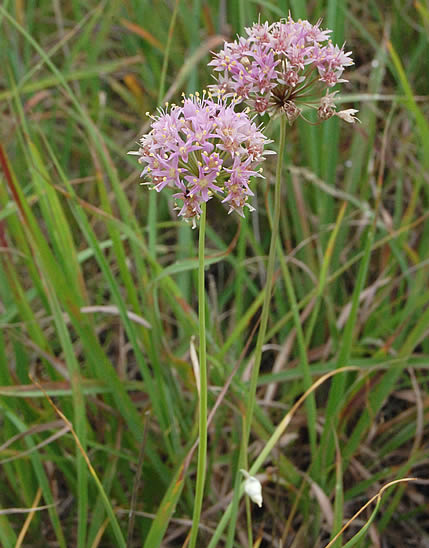
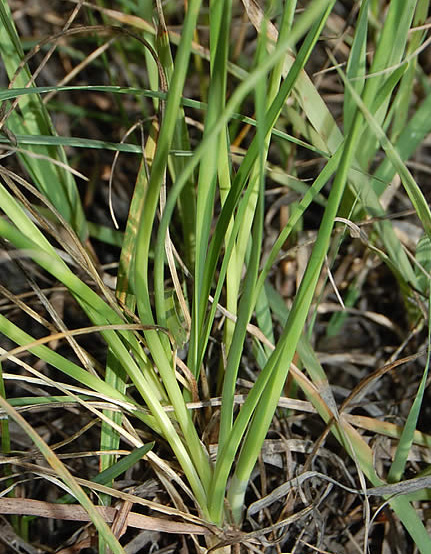
Prairie Wild Onion (Allium stellatum)
Plant height 8 to 12 inches
Bloom season July to August
Habitat Sun; medium moisture to dry fields, prairies, rocky areas
Flowers
- 6 pale pink to purple, occasionally white, tepals; yellow ovary at center; long stamens with yellow anthers
- ¼ inch diameter
- Round terminal umbel, 1.5 to 2 inches across, subtended by 2 to 3 bracts
Leaves
- Basal; narrow and grass-like
- Up to as long as the plant is tall
- Smooth
Stems
- Unbranched
- Hairless
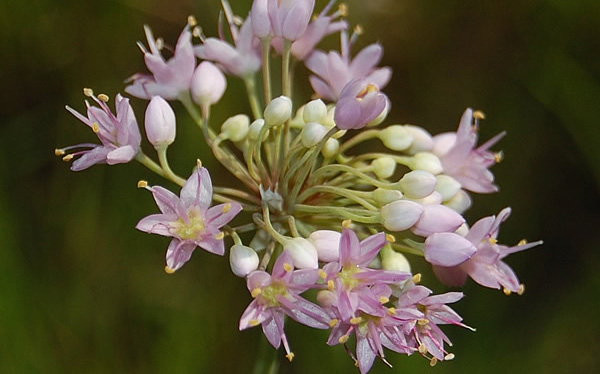
The entire plant has an onion aroma when crushed. Contains bulbs up to an inch across and about an inch below the surface. Flowers are just as flavourful as the bulb.
Purple Prairie Clover (Dalea purpurea)
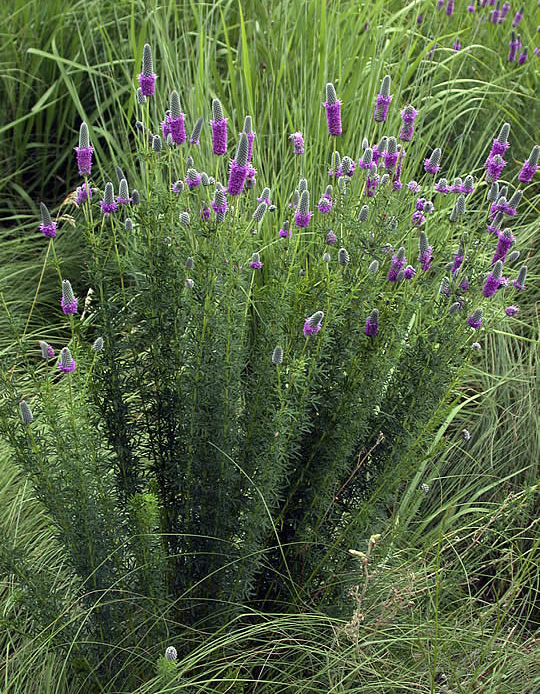
Plant height 12 to 20 inches
Bloom season Late June to August
Habitat Sun; moist to dry fields, prairies, rocky areas
Flowers
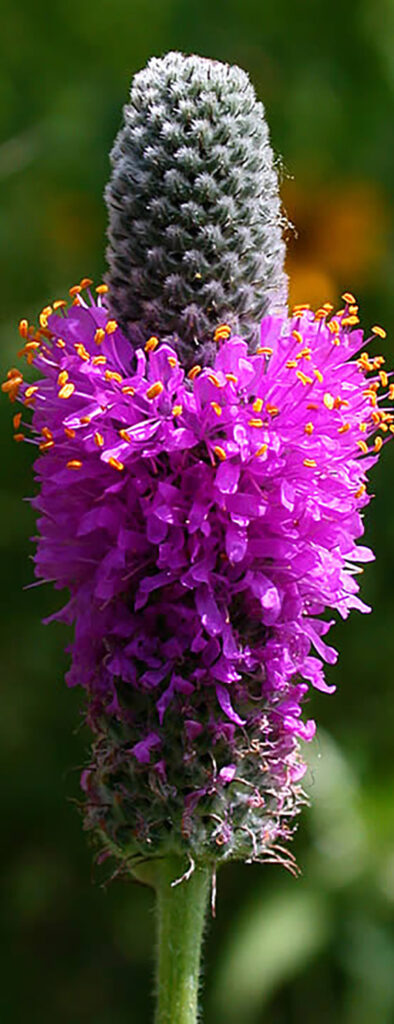
- 5 purple petals; orange-yellow anthers
- Cylindrical, dense flower clusters; ½ to 2 ½ inches long at top of stem
- Flowers bloom from bottom to top; flower head is woolly and dull grey before and after flowering
Leaves
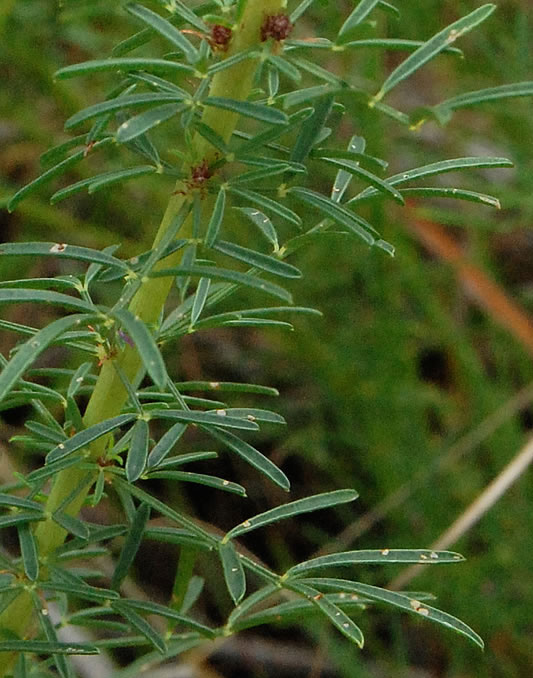
- Alternate; pinnately compound; smooth edges
- 3 to 7 linear leaflets per leaf
- 1 to 2 inches long, leaflets less than 1⁄₈ inch wide
- May be densely packed near base of stem and sparser on upper part of stem
- Parsley or citrus scent when crushed
Stems
- Multiple stems emerging from base of plant
- Unbranched, slightly ridged stems
- Hairless
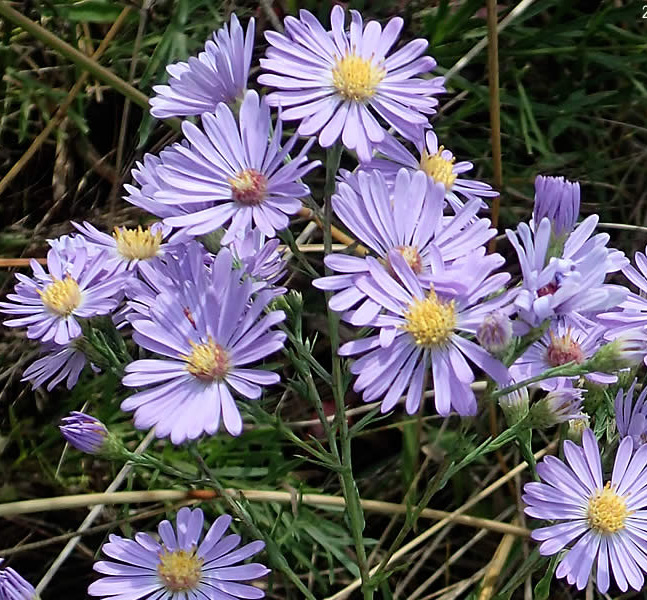
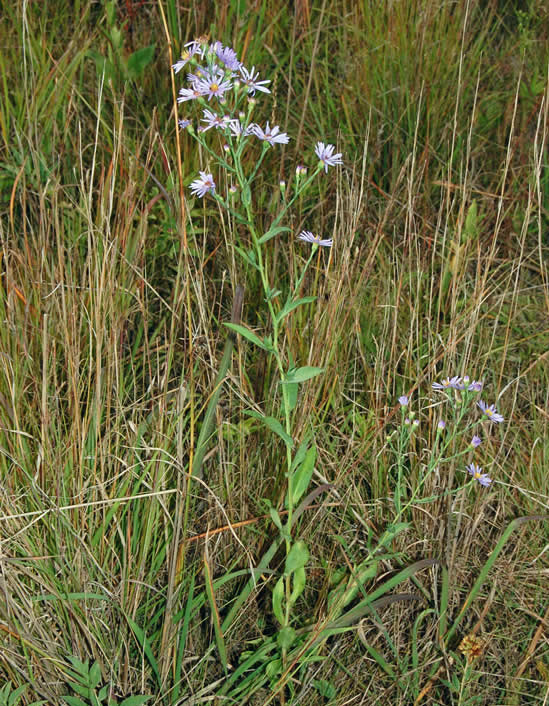
Smooth Blue Aster (Symphyotrichum laeve)
Plant height 1 to 3 feet
Bloom season July to October
Habitat Sun; dry; fields, prairies, open woods
Flowers
- >7 light to medium blue purple petals; yellow disk that turns reddish with age
- 1 inch diameter
- Branched clusters that are often ascending at the top of the plant containing few to many flowers
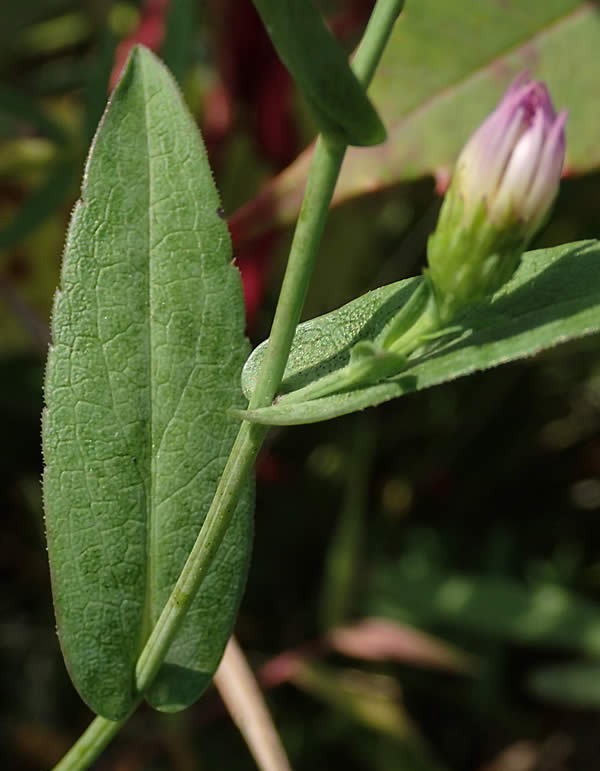
Leaves
- Alternate; simple; entire or with shallow teeth
- Lower stem leaves are spatula shaped to lance-oblong with winged petioles, upper stem leaves are egg shaped to lance-linear
- Up to 4 inches long, 1 ½ inches wide
- Smooth and almost waxy, lobes at the base are clasping
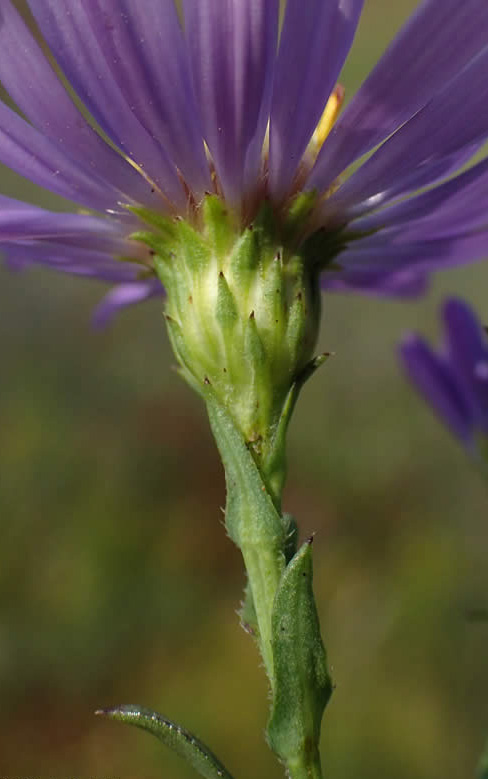
Stems
- Green to reddish
- Erect stems with stiff, ascending flowering branches
- Smooth
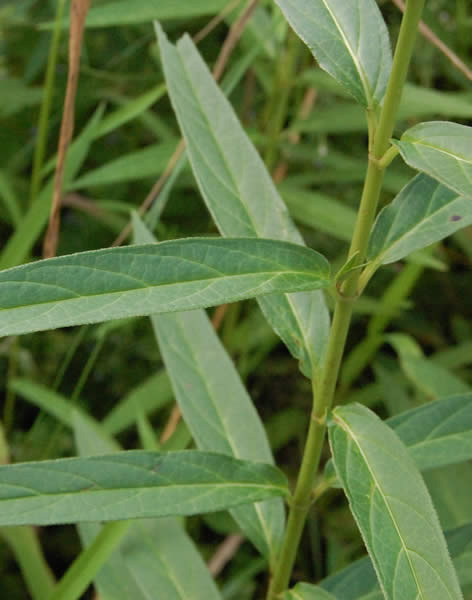
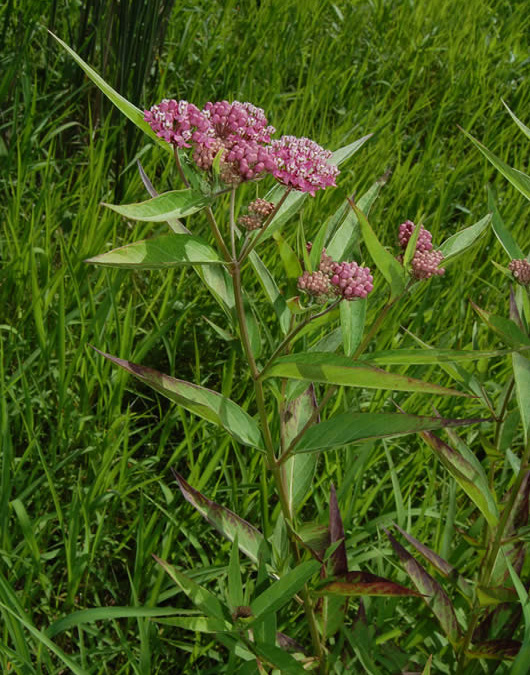
Swamp Milkweed (Asclepias incarnata)
Plant height 3 to 4 feet
Bloom season July
Habitat Sun; wet fields, swamps, ditches, shores
Flowers
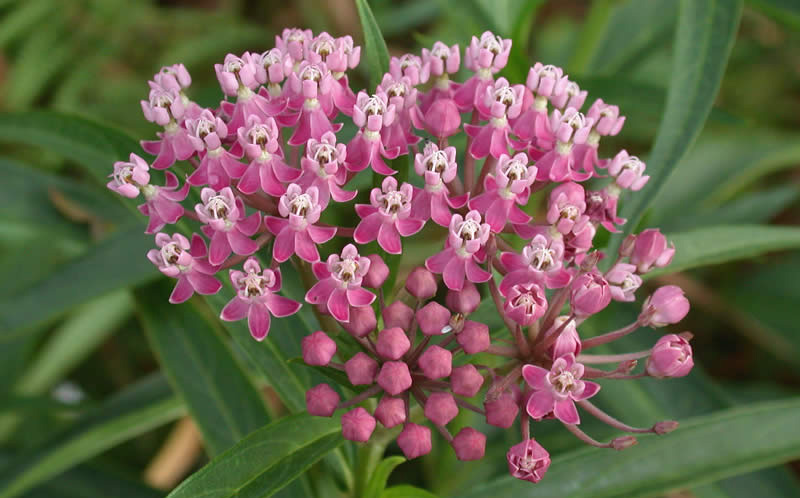
- Domed clusters of pink flowers
- Each flower has 5, deep pink reflexed petals below a lighter pink, 5-parted, star shaped crown with a cream coloured center
- ¼ inch diameter
- Several convex clusters per plant; many flowers per cluster
- Strongly sweet scent, like cherry vanilla
Leaves
- Opposite; simple; entire
- Greenish purple; lance-linear to lance-elliptical
- 6 inches long, 1 ½ inches wide
- Smooth
Stems
- Greenish purple
- Branching in upper 1⁄₃ of plant
- Mostly hairless, may have fine hairs in upper plant
Water Smartweed (Polygonum amphibium)
Plant height 1 to 3 feet
Bloom season June to September
Habitat Part shade, sun; moist soil; ditches, shallow and slow-moving waters, shores, marshes
Flowers
- 5 pink tepals fused at base; white stamens have pink anthers
- 1 to 2 dense clusters per stem
- Clusters are thimble-shaped (~1 inch) in terrestrial plants and cylindrical (up to 2 inches) in aquatic plants
Leaves
- Alternate; simple; entirely green, variable shapes
- 6 inches long, 2 inches wide
- Terrestrial plants are covered in long, dense, pillowy hairs, giving them a lighter green appearance; leafy collar encircles stem at leaf bases and is flush with stem. Stalkless
- Aquatic plants appear smooth but have a covering of hairs lying flat against the leaf (more obvious when they reflect sunlight); long stalked
Stems
- Green
- Rhizomes create dense colonies
- Branched or unbranched; erect or sprawling
- Densely hairy in terrestrial plants; smooth in aquatic plants and slightly ribbed
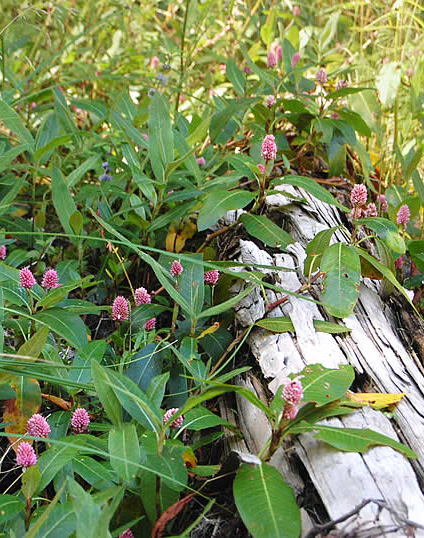
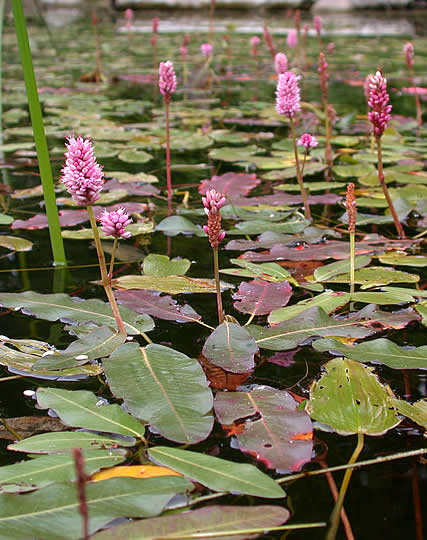
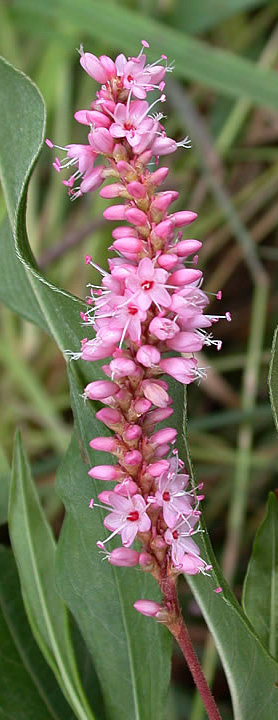
This species is named “amphibium” because plants growing in deep water (aquatic) look quite different than those growing in shallow to no water (terrestrial). Plants may look like “hybrids” in transition areas.
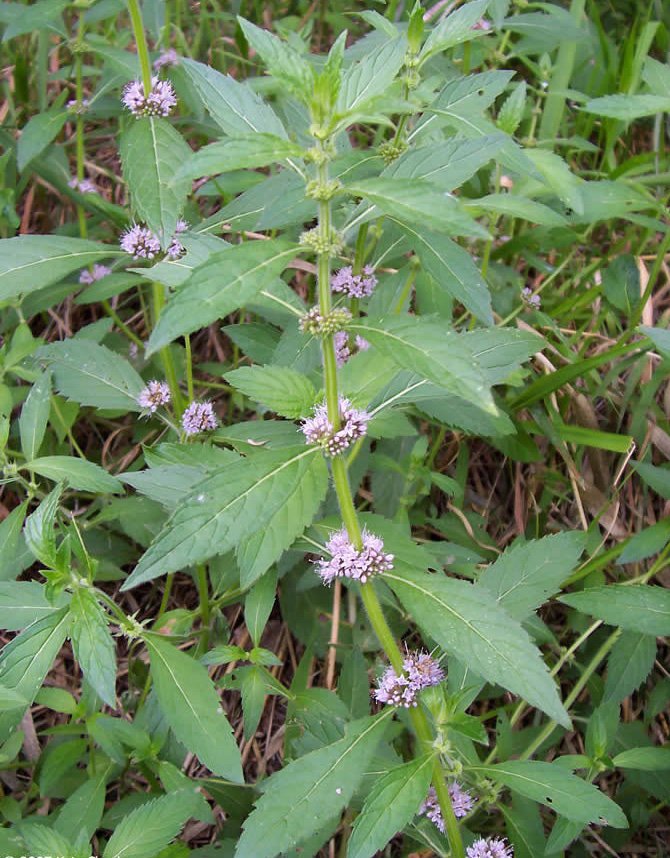
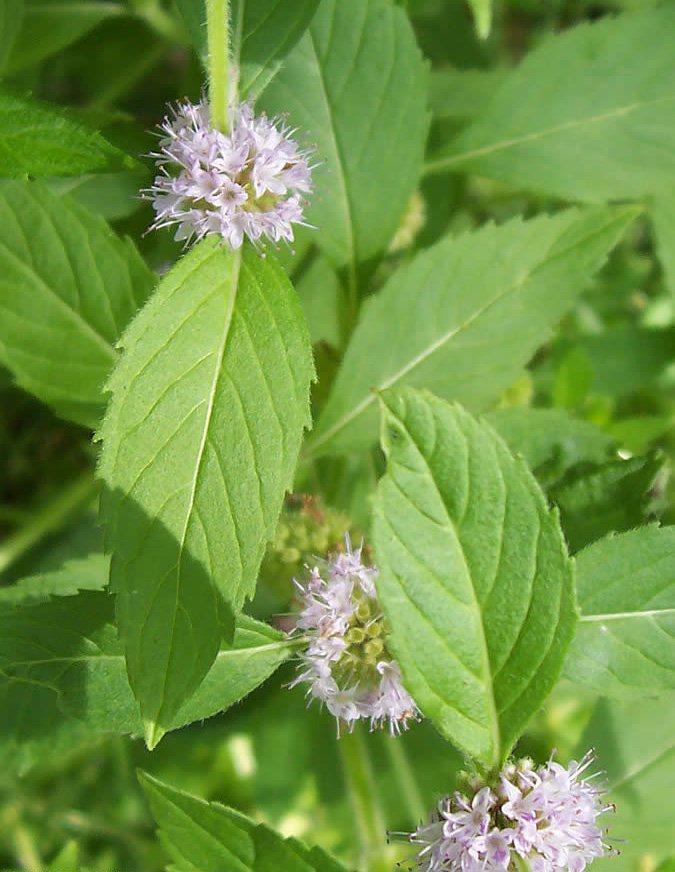
Wild Mint (Mentha arvensis)
Plant height 6 to 24 inches
Bloom season July to August
Habitat Part shade, sun; moist soil; thickets, wet meadows, marsh edges, shores
Similar species Rough Bugleweed (p. 52), which has white flowers, leaves angled upward and lacks the strong minty smell.
Flowers
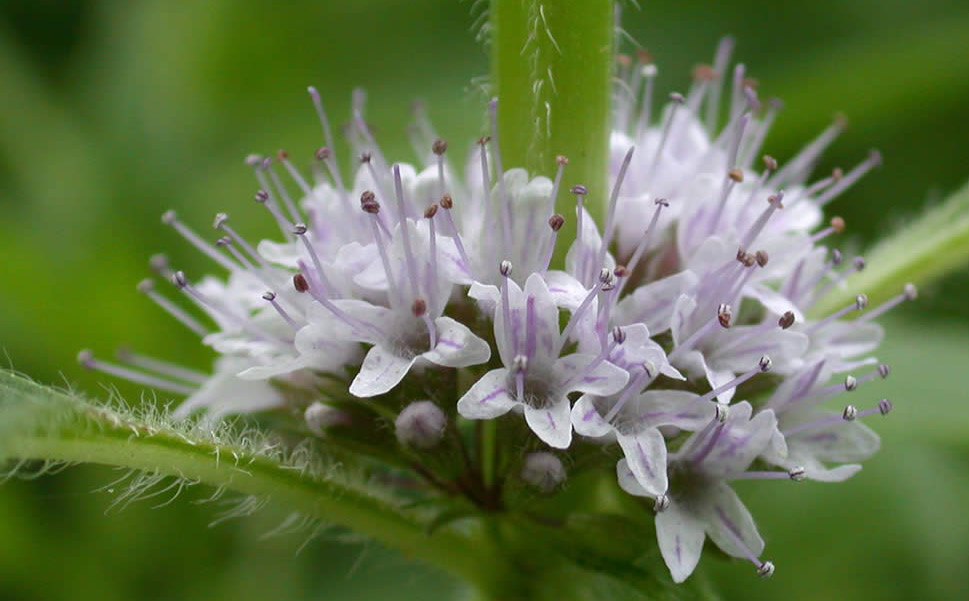
- Whorled clusters of pink to lavender or white flowers around leaf axils
- 1⁄₈ inch long; irregular; 4 white to violet stamens protrude well beyond the petals
- Blooms from lower plant to top
Leaves
- Opposite; simple; serrated edges
- Green; lance-elliptical
- 2 ½ inches long, 1 inch wide
- Finely haired on lower surface
- Short-stalked leaf pairs arranged at 90-degree angles to those above and below
- Strong mint scent when crushed
Stems
- Green to red
- Single from base; ascending to erect
- May be branched
- Square; hairy throughout or just along edges