Glossary
Understanding prairie plant terminology is essential for accurate identification. This section defines key botanical terms such as flower structures, leaf shapes, and stem features used throughout the booklet. Use it as a reference while exploring the guide to clarify unfamiliar words and deepen your plant knowledge.
Flowers
Flower shapes
Regular – Radially symmetrical. Cut a flower at any angle (like a pie) and both halves are mirror images of each other (e.g., Black-eyed Susan).
Irregular – Bilaterally symmetrical. Only symmetrical on one plane because some petals/sepals have a different size or shape (e.g., violet).
Flower structure
Flower clusters
Leaves
Leaf divisions
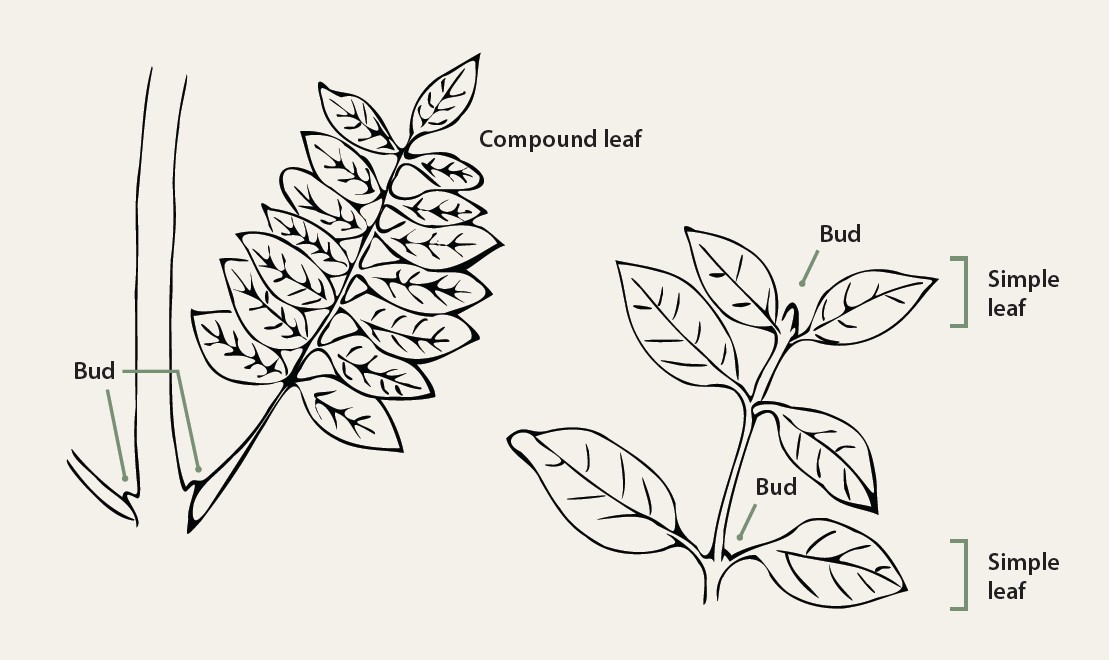
Compound leaf – One of two leaf types. Compound leaves are separated into two or more smaller leaf-shaped structures (leaflets). Leaflets may also be divided, making the compound leaf divided ≥ 2 times. Compare with simple leaves.*
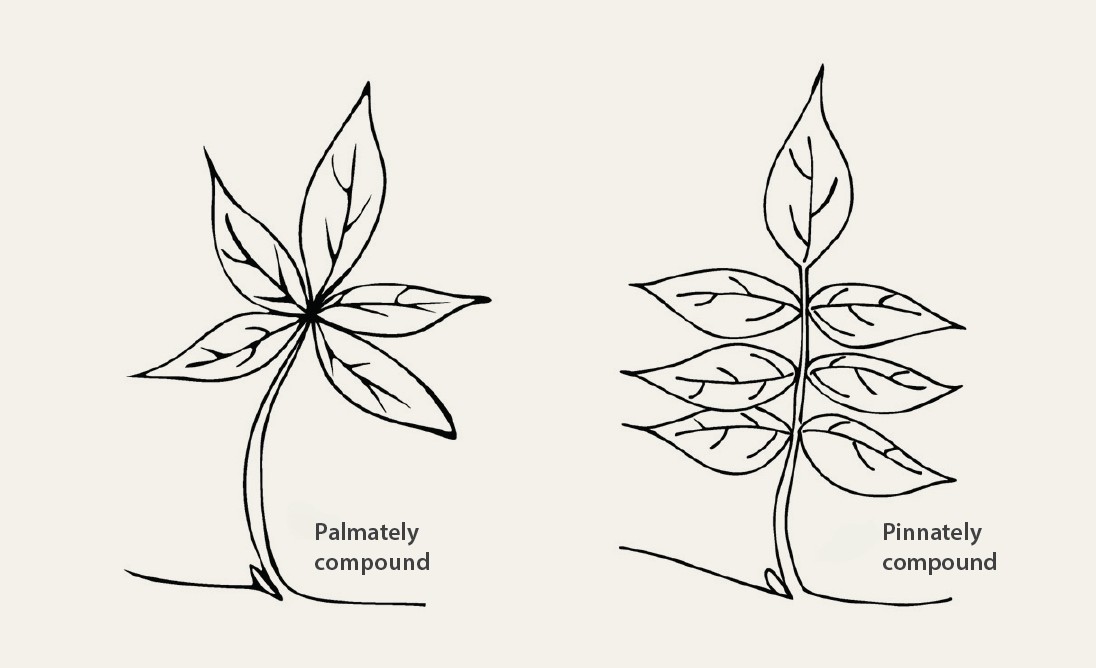
Pinnately compound – Leaflets arranged on either side of a common axis (the mid-vein); “of a feather” (Fig. 3).
Palmately compound – Leaflets radiate from a common point, like a hand with fingers spread (Fig. 3).
Leaflet – Leaf-like structures that make up a compound leaf.
Simple leaf – One of two leaf types. A leaf that is not divided into leaflets but may be deeply lobed. Compare with compound leaves.*
Terminal leaflet – Leaflet positioned at the leaf tip.
Note: All leaves have a bud at the base of their leaf stalk (in the axil), leaflets do not. You can
use this feature to differentiate between simple leaves from compound leaves and stems.
(Fig. 4). Also, a compound leaf will lay flat (in one plane), a branch will have leaves sticking
out in different directions (planes).
Leaf position on stem
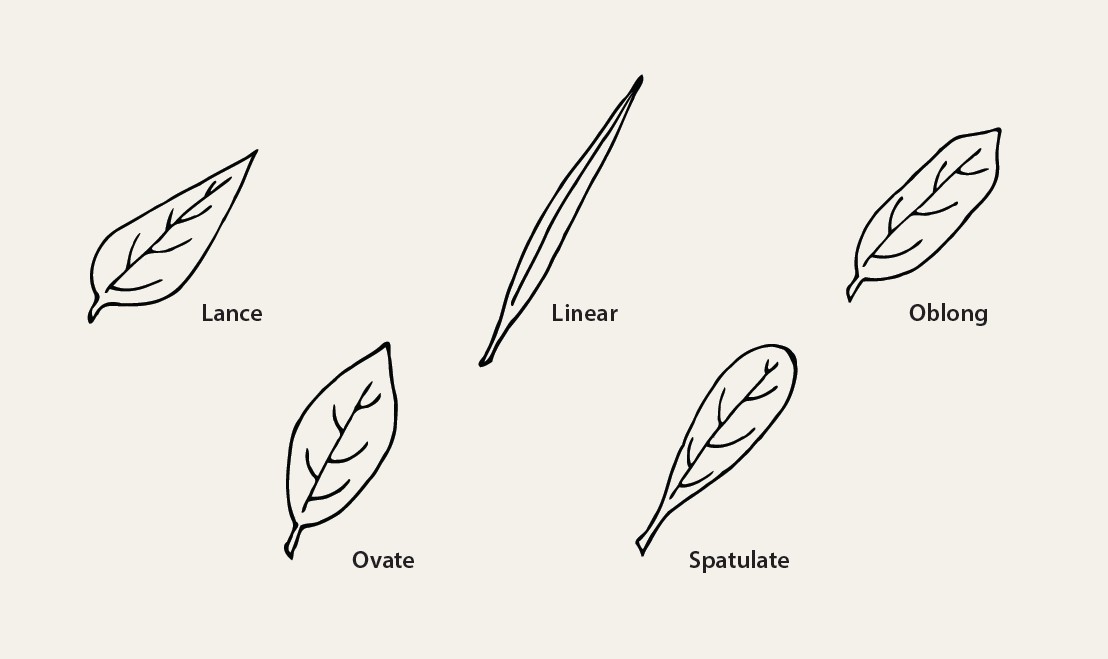
Leaf shape
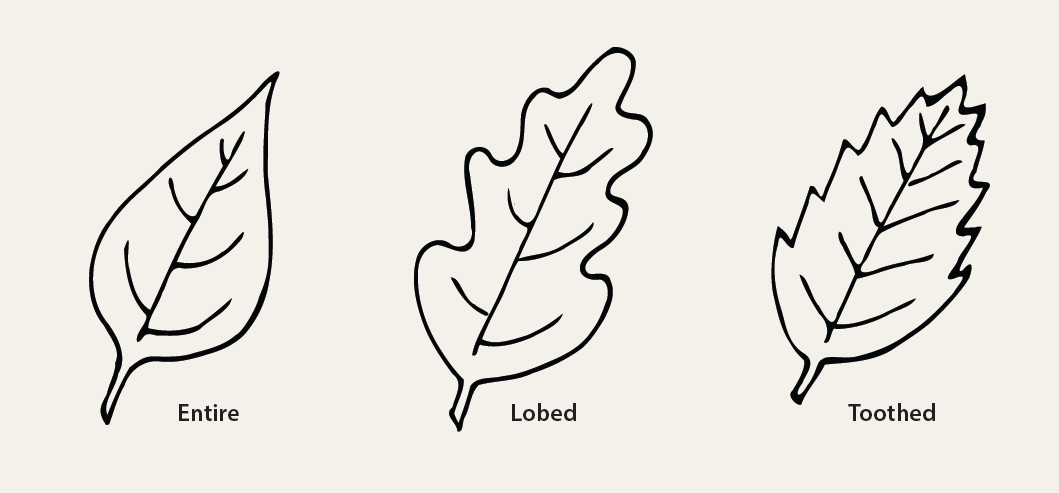
Leaf edges
Leaf structure
Stems
Stems
Ascending – Growing upward or turned up.
Axil – The upper angle where a leaf or branch meets the stem.
Erect – Upright and vertical.
Node – Place on the stem where the buds, leaves and branching stems originate.
Rhizome – An underground, root-like stem.
Stalk – A catch-all term for the supporting stem of an organ. May refer to a flower stalk, leaf stalk or main stem.
Figures
Figure 1
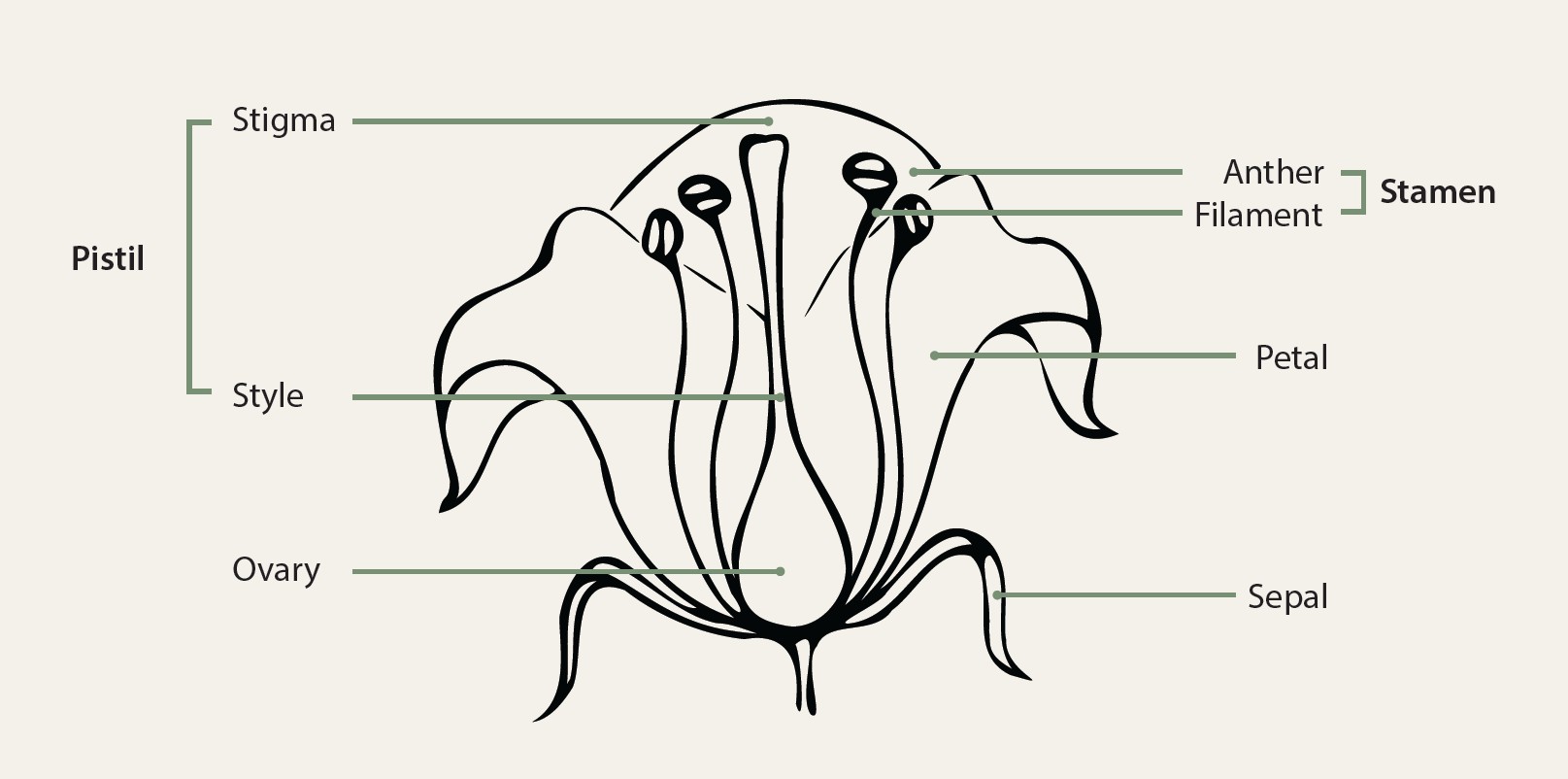
Figure 1. Labelled diagram of a flower cut in half to show the different floral parts. Although each part may vary in number (e.g., one species may have 4 stamens/ flower whereas another species may have over 100 stamens/flower), they are always found in the same location. From exterior to interior, there are sepals, petals, stamens and then pistils as the most interior structure.